


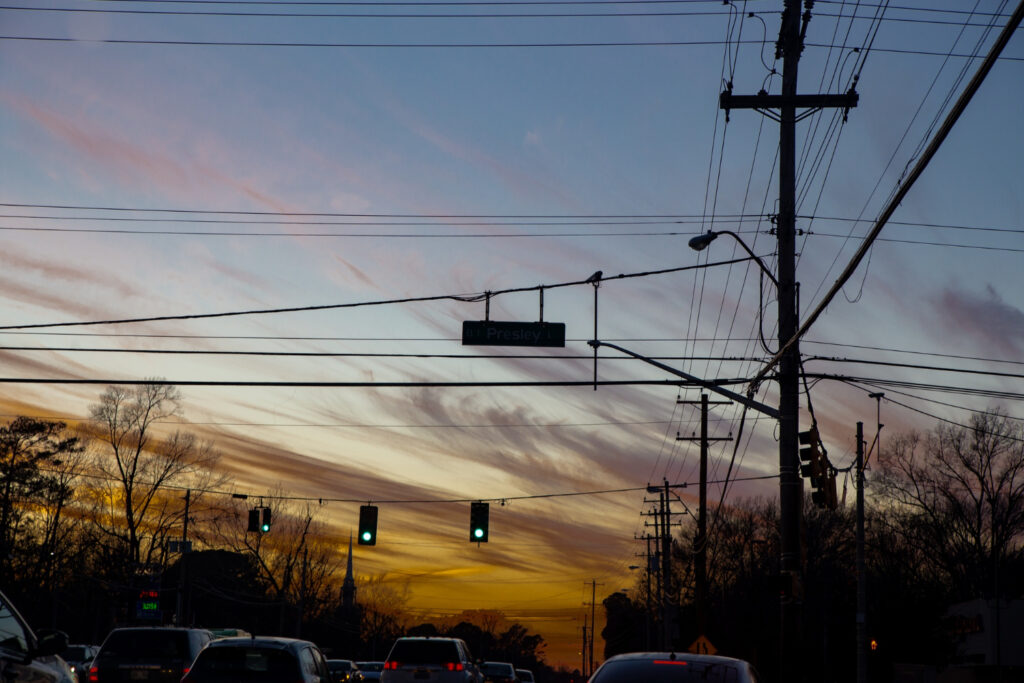
Few things seem more inevitable than wind in the foothill towns and high plains of Colorado. But what came next in December was more than just another windy day. The public’s patience was largely lost when the power was abruptly cut off due to a well-thought-out decision.
More than 100,000 Coloradans were without power as of late last week—some for a few hours, others for several days. Not just flying debris or broken poles were the cause. A lot of it was intentional. Citing extremely high winds and extremely dry conditions, Xcel Energy initiated its Public Safety Power Shutoff program. Theoretically, it served as a safeguard against starting devastating wildfires. In reality, it created a new set of issues, particularly in the areas of timing, planning, and communication.
| Topic | Details |
|---|---|
| Utility Provider | Xcel Energy |
| Area Impacted | Colorado (Front Range: Boulder, Jefferson, Clear Creek, Gilpin, Larimer, Weld counties) |
| Total Outages | Over 100,000 customers affected across planned and unplanned outages |
| Triggering Event | Hurricane-force winds, dry conditions, and wildfire risk prompted Public Safety Power Shutoffs (PSPS) |
| Key Public Concern | Lack of timely, clear communication and delayed restoration timelines |
| Official Response | Gov. Jared Polis called for more transparency and better coordination |
| Support Measures | Red Cross shelters and charging stations opened for affected residents |
| Reference | https://co.my.xcelenergy.com/outage-safety |
Preemptive power outages are not a novel idea. Following the devastation of entire communities by wildfires, utilities in California normalized the practice. Colorado also started using similar tactics after learning from recent disasters. However, the events of the past week demonstrated how unfinished those systems still are.
Families in Boulder, Jefferson County, and elsewhere were abruptly disconnected. Small eateries in Golden, schoolchildren in the foothills, and seniors in Evergreen were all perplexed: Why now, and how long?
A Golden mainstay, Woody’s Wood-Fired Pizza, inadvertently became a representation of the effects of the outage. Owner Jon Bortles had to quickly rent a refrigerated truck in order to preserve his stock. His team attempted to assist stranded employees in finding places to sleep while pouring drinks by headlamp. It was a scene that was both improvised and draining, but it was remarkably similar to what was happening in dozens of other nearby establishments.
The outage map showed a depressing picture by late Friday: 85,000 customers were still offline, and full restoration was not anticipated until Sunday or later. Hundreds of field workers were deployed by Xcel, and their efforts were clearly visible. However, the wait was unbearably long for residents without access to essential devices or heat.
In a sharp statement, Governor Jared Polis called for “exceptionally clear” communication going forward. He advocated for real-time restoration updates and blasted the absence of precise alerts. Interestingly, Polis had previously questioned Xcel’s emergency procedures. He pointed out that many of the issues raised by a similar PSPS event in 2024 are still unresolved.
When I first scanned that press release from 2024, I thought it sounded more like a memo to be filed than a lesson to be applied. A subtle feeling of déjà vu was evoked when the same frustrations reappeared two years later.
For its part, Xcel defended the ruling. It claimed that fire conditions were categorized as a “particularly dangerous situation” and that weather models had predicted hurricane-strength gusts—Boulder recorded 112 mph. Proactive shutoffs were presented as a responsible, if inconvenient, solution in this situation.
Most residents seemed to understand that part. What frustrated them more was the execution: inconsistent alerts, vague text messages, outage maps that lagged in real time, and neighborhoods going dark even without visible hazards.
Even though they lived in areas with subterranean lines, a number of customers expressed confusion after losing power. Later, Xcel clarified that even if damage isn’t visible close by, power can be cut off because of the way the grid is set up. Accurate technically, but annoying in practice. These information gaps were dangerous as well as inconvenient for many families with medical needs or refrigerated medication.
Emergency shelters were opened in response. In order to provide short-term assistance, the American Red Cross organized warm areas and charging stations throughout the impacted counties. Residents attempting to escape the cold or power their phones were welcomed at locations in Berthoud, Evergreen, Black Hawk, and Lakewood. Volunteers put in endless hours; one family, who had lost both electricity and cell service, even brought three dogs.
The wider problem for Xcel now extends beyond power restoration. Restoring trust is part of it. Neither weather forecasting nor equipment malfunctioned. It was an inability to foresee the consequences of remaining silent.
Communities are strong. This has been repeatedly demonstrated throughout Colorado. However, they also anticipate predictability, particularly when livelihoods, health, and safety are at risk.
The rules governing PSPS actions will probably be reviewed by public utility regulators in the upcoming weeks. Statements, hearings, and possibly even new timelines and mapping procedures are all planned. Whether or not locals feel heard—rather than just informed—is what really counts.
Looking ahead, one thing is especially evident: even though proactive power shutoffs are incredibly effective at preventing fires, they cannot be successful without equally reliable parallel communication systems.
More than a “Power Out” text message is what Coloradans deserve. They should have a timeline, an explanation, and a clear voice on the other end that explains what is going on and why.
Because knowledge is also power during disruptive times.