


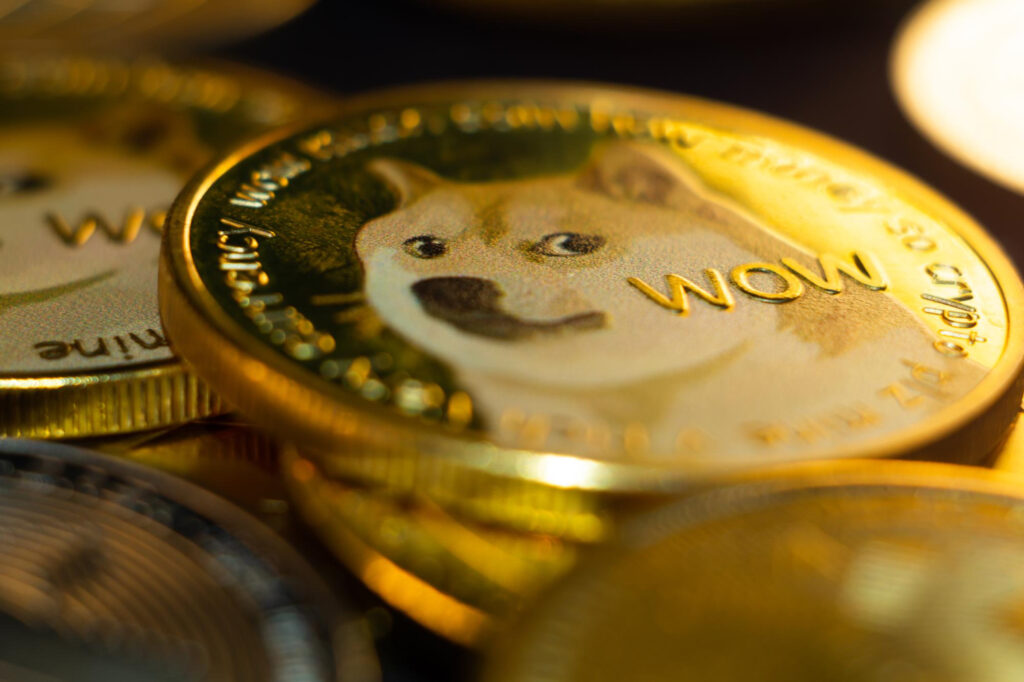
Dogecoin was not intended to last this long. It never promised the features that make blockchain enthusiasts swoon, nor was it marketed as revolutionary. Rather, it winked. It made a joke. It growled at the gravity of Bitcoin. And that’s the exact reason it persisted.
Dogecoin was an internet inside joke that went viral when it was first introduced in 2013. It made use of a Shiba Inu’s endearing smile and the humorous timing of a well-timed “wow.” Notably, it was the first cryptocurrency that allowed you to send money while laughing.
| Aspect | Detail |
|---|---|
| Launch Year | 2013 |
| Creators | Billy Markus and Jackson Palmer |
| Meme Origin | Inspired by the viral “Doge” Shiba Inu meme (Kabosu the dog) |
| Initial Purpose | Parody cryptocurrency to make crypto fun and accessible |
| Key Turning Point | Elon Musk’s repeated endorsements and cultural engagement |
| Utility Today | Tipping, donations, payment for goods/services, NFTs |
| Key Traits | Low fees, large circulating supply, exceptionally loyal community |
| Cultural Status | Most recognizable and actively traded meme-based crypto asset |
Dogecoin had a distinct vibe from the beginning. DOGE thrived on accessibility and shared joy, whereas the majority of digital assets made a concerted effort to demonstrate their usefulness. To participate, you did not have to decipher a whitepaper. Joining in on the fun was all that was required.
It developed into a gentle entryway into the complex tangle of crypto culture during the last ten years. Adolescents gave DOGE tips to Twitch streamers. Donation campaigns were run by Reddit threads. Additionally, it became abundantly evident that this was participation at scale rather than merely online theater when users banded together to support a Jamaican bobsled team in 2014.
Then came the Musk effect.
Elon Musk, the CEO of Tesla, a part-time meme king, and a former Saturday Night Live host, started tweeting about Dogecoin on a regular basis by 2021. occasionally using emojis of dogs. Occasionally, cryptic statements such as “Dogecoin is the people’s crypto” are used. The impact of these tweets on market behavior was remarkably immediate. Costs increased. Exchanges faltered. Without hesitation, new investors jumped in.
In that year, DOGE surged to a record high, briefly surpassing several international banks in market capitalization and touching $0.73. The mechanics were hurriedly explained by analysts. However, that wasn’t the point for a lot of holders. It was enjoyable. It was taking place. They were early, too, for once.
The coin plunged—hardly—when Musk later referred to Dogecoin as a “hustle” in his Saturday Night Live appearance. However, it did not disappear. It just reset. Many people continue to underestimate the fact that Dogecoin is resilient. It simply waits while reloading its meme canon.
Over time, people—rather than technology—have become Dogecoin’s true strength. It has survived downturns thanks to a remarkably diverse community, tipping, promotion, and unwavering optimism. Dogecoin has proven to be exceptionally sticky, in contrast to most assets that falter when the hype subsides.
Newcomers have been onboarded with remarkable success thanks to its appeal. First-time cryptocurrency users benefited most from its friendlier face and lower transaction fees. It was the first token, wallet, or digital payment for a lot of people.
Dogecoin doesn’t pursue technological innovation. It doesn’t compete with Bitcoin on scarcity or Ethereum on smart contracts. However, its dependability has proven to be highly adaptable, both technically and culturally.
This is the reason why financial traditionalists find Dogecoin so perplexing. It shouldn’t work, but it does—loudly and consistently. Its status as a meme enhances rather than diminishes its worth.
I still recall seeing my younger cousin use Dogecoin as a punchline to explain blockchain to his classmates. He compared it to Monopoly money, but added that you could use it to purchase socks. That ridiculous yet illuminating moment demonstrated the extent to which Dogecoin had become ingrained in younger digital culture.
And right now? Dogecoin is still a functioning system. Its function, not the engineered, silicon-chip sense. It transfers emotions, money, and ideas. It draws in attention and transforms it into volume of transactions. It transforms humor into velocity and serves as a cultural engine.
The coin surged once more during Trump’s reelection in 2025, when Musk was appointed head of the newly established Department of Government Efficiency (abbreviated D.O.G.E.). Dogecoin futures saw close to $3 billion in open interest. It was bizarre, but not unexpected.
Every mention of Musk, alteration to the logo, or allusion to a meme serves as fuel. The community’s communication has significantly improved, stabilizing its image and transforming volatility into a kind of rhythm. Instead of stumbling, it dances.
Dogecoin is not without difficulties, though. Ownership is still dominated by the top. Development is sluggish. Its practical use cases have only slightly increased, despite the fact that its brand is still strong. This is concerning to institutional investors. For retail believers, however, these are merely eccentricities.
It’s interesting to note that its application has spread to digital payments and NFT ecosystems, where fees and speed are more important than institutional polish. Some merchants don’t hesitate to accept it. Others smile and accept it.
Dogecoin continues to appear in unexpected places thanks to strategic alliances and visibility generated by memes. On storefronts, occasionally. Occasionally in chat on Twitch. In some cases, even at ATMs. It is surprisingly durable for something that was made as a joke.
Dogecoin is a proof of culture rather than proof of stake when it comes to digital assets. It was not designed to maximize efficiency or profits. It is inadvertently designed to flourish in chaos.
It appears that this chaos has been very effective in sustaining it.
It’s unclear if Dogecoin will eventually fade or become a permanent part of finance. However, its journey provides something distinctly human—a reminder that humor, belief, and group happiness can generate momentum just as effectively as code.
Perhaps that wasn’t what the creators of crypto had in mind. However, it is unquestionably what prevented Dogecoin from going extinct. And that’s more than sufficient for a lot of people to continue holding.