Hyperliquid equity perpetuals turned SpaceX’s IPO into a 24/7 derivatives event months before Wall Street’s clearing infrastructure had processed a single share. The numbers confirm what the headline implies: these are not a novelty product running on thin volume.
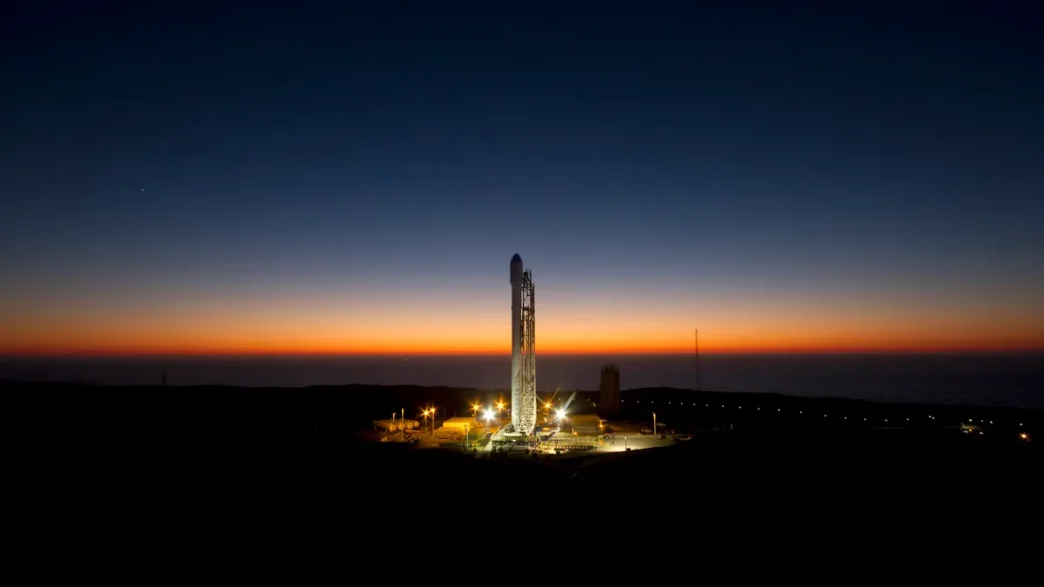
SPCX priced at $135 per share on 12 June 2026, raising approximately $75 billion at a valuation near $1.75 trillion, the largest initial public offering in history, according to IPO.club. The perp was already live. Within hours of contract launch, the mark price had surged 17.43% to $211.38, with $23.4 million in open interest and $34.3 million in 24-hour volume already built, per data cited by Binance Square.
By the time the stock peaked at $225.64, the SPCX perp had tracked it to $228.74. Then came the descent. Reuters reported on 15 July 2026 that shares had slid below the $135 IPO price, with a Capital.com senior market analyst attributing the retreat to ‘profit-taking, valuation reassessment and the unwinding of extremely bullish positioning following one of the most anticipated listings in recent years.’ TradingKey places the cumulative drop from peak at approximately 53%, a further leg beyond the 48% captured in earlier reporting.
Through all of it, the perp never closed.
The scale behind the SPCX trade
Pre-IPO, SPCX perps had already accumulated over $215 million in open interest and $2.2 billion in cumulative volume across Hyperliquid, Coinbase International, Binance, Gate.io, and OKX, with the market pricing roughly a 15% day-one pop above the IPO price, according to MetaMask News. On 12 June itself, Hyperliquid’s SPCX contract alone recorded $1.4 billion in single-day volume, making it the platform’s biggest-ever market, per Yahoo Finance. Stock-linked perps collectively pushed $18.8 billion in volumes across the first half of June 2026.
Talos puts total open interest across all SPCX venues above $250 million at peak, with daily volumes exceeding $250 million on the busiest days. Hyperliquid and Binance together accounted for approximately $1.9 billion of a roughly $2.7 billion cumulative total. Hyperliquid’s HIP-3 builder-deployed perpetuals mechanism had already amassed approximately $290 billion in cumulative trading volume and $3 billion in open interest across equities, indices, and commodities before the SpaceX listing even landed.
What Hyperliquid equity perpetuals actually are
Three components carry the product. The oracle feeds a reference price assembled from listed-market data during exchange hours and from the perp’s own order flow when Nasdaq is dark. The funding rate, a periodic payment from whichever side of the book is heavier to the other, replaces ownership as the mechanism that keeps the contract on peg. The venue provides a fully on-chain order book, stablecoin collateral, and a liquidation engine with no clearinghouse behind it.
Together they deliver what the equity market rations by design: continuous trading against a 32.5-hour listed week, symmetric short exposure without locates or borrow fees, high leverage on stablecoin collateral, and access for anyone with a wallet rather than a US brokerage account.
The $14 million SPCX short at 10x leverage, paired with a $60 million Bitcoin short at 40x, was the product’s clearest proof-of-concept trade. No prime broker would have structured it. No retail app could have executed it. The perp did both, around the clock, against a lockup of roughly 911.5 million shares that made the listed short market nearly inaccessible to retail.
What the perp is not matters equally. The holder owns no dividend, no vote, no bankruptcy claim. Integrity depends on oracle quality and venue solvency, and the venue, for most equity perp platforms, sits offshore and on-chain, outside every traditional investor protection. Hyperliquid’s Assistance Fund had deployed over $1.3 billion into HYPE buybacks by May 2026, per CF Benchmarks, which gives the fee engine genuine scale, but solvency concentration risk remains the category’s unpriced tail.
The regulatory void and the CFD precedent
Synthetic equity exposure settled in stablecoins on offshore infrastructure falls between the SEC’s securities jurisdiction and the CFTC’s derivatives authority. The CLARITY-era framework allocating digital assets between the two agencies does not address it. US platforms do not list equity perps for this reason; offshore venues reach everyone else, and enforcement reaches the marketing and the fiat ramps, not the protocol.
Contracts for difference ran this same play against European retail two decades ago: synthetic exposure, high leverage, no share ownership, offshore. They grew into a regulated, repeatedly scandal-scarred fixture of European and Asian trading, banned outright for US retail. Hyperliquid equity perpetuals repeat the structure with three upgrades: transparent on-chain positioning instead of dealer books, market-set funding rates instead of broker discretion, and self-custodied collateral instead of client-money accounts. The one downgrade is the absence of any regulatory perimeter at all, not even the imperfect one CFDs eventually accepted.
The CFD arc implies the roadmap: offshore volume concentration, a defining stress event that forces structure, then bifurcation into regulated products where allowed and grey markets where not. The first enforcement action or CLARITY-era rulemaking that names synthetic equity exposure will mark the transition. Until then, Hyperliquid equity perpetuals price the world’s most important companies around the clock, and the listed market opens each morning to a tape that has already moved.