


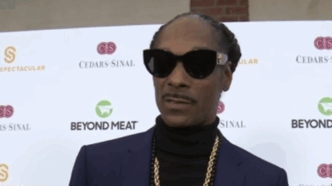

Snoop Dogg has always moved with a sense of the long game—smoothly, methodically, and with an eye for opportunities that others overlooked. His ascent from his G-funk beginnings in the early 1990s to his current status as a $160 million entrepreneur is a striking example of how ingenuity, timing, and hard work can turn a music career into a diverse commercial portfolio.
Snoop was first made famous by Dr. Dre’s The Chronic in 1992. His easygoing demeanor and charisma made him instantly identifiable. In 1993, he released his first album, Doggystyle, which sold over 20 million copies and became a cultural icon. However, the money didn’t just come in. Artists are frequently caught in short-term thinking by early fame. Snoop started to change his perspective after being greatly affected by Master P. He started researching ownership, branding, and what it meant to manage infrastructure in addition to output.
| Name | Snoop Dogg (Calvin Cordozar Broadus Jr.) |
|---|---|
| Born | October 20, 1971 — Long Beach, California, United States |
| Career Milestones | 35M+ albums sold, Owner of Death Row Records, NBC Olympics contributor, Founding partner in Casa Verde Capital |
| Primary Income Sources | Music royalties, brand deals, TV and film, cannabis business, venture capital, wine label, YouTube kids’ show |
| Estimated Net Worth (2026) | $160 million |
| Reference |
His acquisition of Death Row Records in 2022 was one of his most strategic and significant actions as a result of this way of thinking. The acquisition, which was valued at about $50 million, transformed a difficult period of his life into a source of income. Many saw Death Row as a tale of celebrity marred by court cases and corporate exploitation. Snoop saw it as a chance to utilize catalog rights in the streaming market and recapture legacy.
He didn’t, however, rely solely on music to propel his career. Snoop positioned himself early in a rising market by co-founding Casa Verde Capital, a cannabis-focused investment firm with a portfolio currently estimated to be close to $300 million. His association with cannabis was always alignment rather than just image. When combined with strong commercial alliances, that genuineness resulted in actual equity.
Partnerships with brands have proven similarly successful. Skechers, Bic, Gucci, Corona, and 19 Crimes wine all contributed to his popularity. Under 19 Crimes, his “Snoop Cali Red” label became a bestseller, bringing celebrity wines into regular supermarket baskets. He is also the creator of Doggyland, a children’s program on YouTube that uses music and animation to teach social-emotional concepts. Twenty years ago, this project might have looked unlikely, but it feels especially novel today.
The Olympics come next. Snoop joined Martha Stewart as a traveling pundit in 2024 and emerged as an unexpected MVP of NBC’s coverage of the Paris Games. His rate every day? An estimated $500,000. He took home $10 million for around three weeks of on-location commentary, humor, and unscripted charm. Snoop extended his cultural importance without pursuing it by making international athletic events feel like informal backyard conversations. It was a brilliant combination of entertainment and promotion.
By then, he had also moved into food goods through Broadus Foods, invested in early-stage tech platforms like Reddit and Robinhood, and even experimented with pet clothing through “Snoop Doggie Dogs.” Coherence, not randomness, is what connects all of this. Whether humorous or serious, every endeavor automatically relates to his identity and perception.
Snoop and his wife, Shante Broadus, have chosen to have a quite modest real estate plan in spite of their wealth. Avoiding the expansive Beverly Hills compounds, their combined property portfolio is worth less than $8 million. Even though it’s not frequently emphasized, this discipline shows a grounded approach, which is especially helpful because many celebrity fortunes burn out on excess before the next record comes out.
Rhythm is more important to his financial resiliency than diversification alone. Snoop understands when to lean in and when to ride the beat, much like a well-structured verse. He has written a cookbook, presented food shows, acted in movies, and ventured into gaming and NFTs. None of those wagers brought him down, even though some of them didn’t blow up. This is due to the fact that his core value—the Snoop brand—is incredibly dependable. Not dazzling. Not too much exposure. Just be there. steady.
The royalties are still important in the music industry. His catalog continues to bring in money, with over 35 million albums sold worldwide. However, music now sits next to several engines rather than in front of them. It’s not a dependency, but a foundation.
Snoop’s methodology is worth looking at for aspiring artists and producers navigating a time of algorithmic popularity and monetization frenzy. His dominion was not created quickly. He developed it gradually, frequently going unnoticed, gaining reputation with each step. Every new endeavor was more about promoting a lifestyle that people already connected with him than it was about following trends.
His influence is evident in the fact that numerous businesses now look to him as a voice, a presence, and a partner—not just in followers or streams. Without ever coming across as overly forced, he has transitioned from gangster rap to children’s programs, from music videos to sports analysis.
Snoop Dogg has demonstrated that personal branding does not necessarily entail changing who you are, particularly in the last ten years. Sometimes it means letting the times catch up with you and double down on who you’ve always been.


