

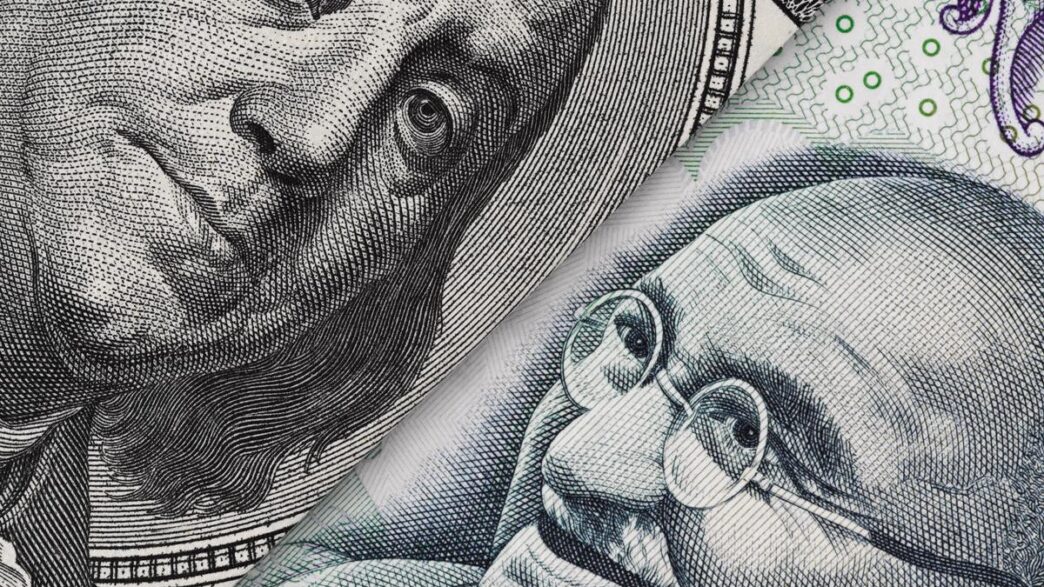
The Indian rupee has captured attention by outperforming the US dollar in recent currency markets. This shift is amid strategic economic changes globally.
A rate cut by the Federal Reserve and cautious investor behaviour has influenced these dynamics, driving a bullish trend for the rupee. Understanding these factors is key to navigating the current financial landscape.
Currency: What’s Happening With the US Dollar and Indian Rupee?
The Federal Reserve’s recent announcement ignited a significant rally in the US stock markets, with the Nasdaq Composite surging by 440 points and the Dow Jones jumping 522 points. This positive movement carried over to the Asian markets, strengthening the Indian rupee against the US dollar. Such rallies indicate increased investor confidence, but also pressure the US dollar further amidst global economic shifts.
Impact of Federal Reserve’s Interest Rate Cut
The Federal Reserve’s decision to cut interest rates by 50 basis points has had widespread effects. It has eased financial burdens for consumers, particularly in mortgages and credit cards, thereby boosting spending and stimulating the economy. The move, while a relief to many, has also reshaped global currency dynamics, with the Indian rupee emerging stronger against a backdrop of a faltering US dollar.
As financial markets adjust, the Indian rupee has reached significant highs, marking a bullish trend against the US dollar. This shift is notable given the prior market caution towards the USD, reflecting broader geopolitical and economic strategies that favour the rupee’s ascent.
The Role of Institutional Investments
Institutional investments play a pivotal role in currency valuation. Following the Fed’s interest rate cut, there was an influx of funds into Asian markets, particularly India. This financial movement has fortified the rupee while adding competitive pressure on the US dollar.
These institutional decisions are often based on anticipated market movements, where the growth potential in Asia currently outweighs that of the US, drawing attention and capital to the region.
This trend might persist if economic forecasts for Asian markets remain upbeat, encouraging further currency domination by the Indian rupee. It’s a strategic play in the ongoing currency evaluations within global markets.
Fluctuations in the Indian Stock Markets
The Indian stock markets have responded with robust growth to the changing financial landscape. The Sensex soared by 1,359 points, and the Nifty climbed 375 points, reflecting renewed investor optimism and confidence. These indices reaching new heights signify more than just numbers; they reflect an economic sentiment that is increasingly bullish on the rupee.
Rapid shifts within stock indices offer a glimpse into investor strategies, with a focus now on sustaining these gains amidst global uncertainties.
Asian Market Trends
The prevailing trends across Asian markets underscore a shift towards strengthened local currencies. With the Indian rupee leading this charge, it’s emblematic of broader economic initiatives across the region that seek to build robust, self-reliant financial ecosystems.
As the DXY index continues to portray a less bullish US dollar, Asian markets are capitalising on the moment to redefine their economic standing globally.
This momentum is strategically advantageous for the Indian rupee, aligning with national policy efforts to maintain growth and stability.
Future Outlook for the Indian Rupee
Looking ahead, the Indian rupee’s trajectory remains poised for greater strength, contingent on sustained economic policies and international trade relations. The focus will be on balancing growth with inflation control, ensuring a stable currency environment.
Investors will need to consider fluctuations in global economic health and policy changes, which could impact currency stability and guidelines.
Conclusion
The interaction between global fiscal policies and market strategies has positioned the Indian rupee as a formidable player against the US dollar. With ongoing developments, the rupee’s strengthened position might hold if supported by consistent economic policies.
Ultimately, the Indian rupee’s ascendance reflects broader financial trends and strategic global shifts. Maintaining this pathway will depend on sustained economic policies and observant market strategies.


