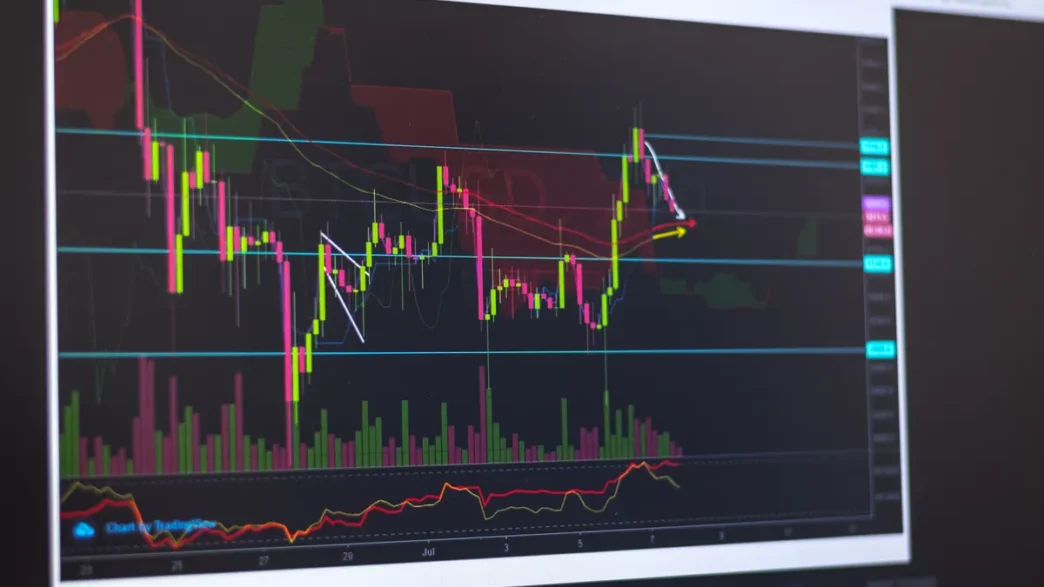
A working paper from researchers at Stanford University and Singapore Management University has identified Polymarket Bitcoin settlement manipulation as a structural problem rather than an inherent flaw in prediction markets, estimating that the mechanics shifted roughly $1.28 million from ordinary participants to more sophisticated traders over the period analysed.
The paper examined approximately 16,000 five-minute Bitcoin prediction contracts over a two-month window, according to Yahoo Finance’s coverage of the study. Researchers found recurring patterns of concentrated spot buying or selling on Binance in the final seconds before each contract settled.
How the settlement window creates an exploit
Polymarket’s short-duration Bitcoin contracts settle against Chainlink price feeds that capture Bitcoin’s market price at the end of each five-minute window. Traders holding large positions can push spot prices in a favourable direction just before that snapshot, then allow the price to revert after settlement locks in.
The study found spot-market order flow spiked near settlement, with prices reversing sharply afterward: the hallmark of Polymarket Bitcoin settlement manipulation rather than directional trading conviction.
The researchers put the net wealth transfer from retail participants to those exploiting the settlement process at roughly $1.28 million. The Bitcoin Foundation’s coverage of the study cites a separate figure: 821 suspected manipulators who collectively pocketed $8.2 million in gross profits. The two numbers measure different things. The $1.28 million is the estimated net transfer out of retail positions; the $8.2 million represents the gross gains attributed to the identified bad actors. Both point in the same direction.
The researchers’ central argument is that this is a design problem. Extending contract duration from five minutes to 15 minutes largely removed the anomalous trading behaviour. Time-weighted average prices as settlement references were also proposed as a structural fix.
Why financial prediction markets are a different animal
The study draws a distinction that matters for how regulators and exchanges approach these products. Unlike markets on elections or sporting events, financial prediction markets allow participants to trade the underlying asset that determines the contract’s outcome. That creates a direct manipulation vector that non-financial event markets simply don’t have, and the researchers argue it is the reason Polymarket Bitcoin settlement manipulation looks different from any structural issue you’d find in a political betting market.
The researchers note that venues including Nasdaq and Cboe have proposed event contracts linked to asset prices, which means settlement methodology will become a live issue in regulated markets, not just in crypto-native protocols.
A shifting regulatory landscape for prediction markets
The study lands as the broader prediction market sector is posting record volumes. Kalshi processed roughly $9.4 billion in June while Polymarket International recorded around $4.3 billion, much of it driven by FIFA World Cup markets. Combined World Cup winner contracts across both platforms had generated more than $5.4 billion at the time of writing, including about $4.25 billion on Polymarket and roughly $1.2 billion on Kalshi.
The legal framework is moving in the sector’s favour, though the map is still being drawn. A federal court in Minnesota enjoined that state’s prediction market ban (Case 0:26-cv-02778-KMM-DTS, filed 27 July 2026), ruling that event contracts qualifying as swaps fall within the Commodity Futures Trading Commission (CFTC)‘s exclusive jurisdiction under the Commodity Exchange Act, thereby preempting state law, per the court document published by Courthouse News.
That ruling tracks the D.C. Circuit’s May 2025 decision in KalshiEX LLC v. CFTC (No. 24-5205), which found Kalshi’s contracts did not involve gaming or unlawful activity. The CFTC’s subsequent Federal Register rulemaking (document 2026-11854, 12 June 2026) references that decision directly.
The Congressional Research Service reports that under current leadership the CFTC withdrew its 2024 proposed rule on event contracts and dropped its appeal of the Kalshi litigation, signalling a materially softer federal stance than existed two years ago. Several states are still contesting that position in court, and legal observers say conflicting appellate rulings could ultimately require the Supreme Court to settle the jurisdictional question.
The settlement design fix the Stanford/SMU paper proposes is technically straightforward. Whether Polymarket adopts longer windows or TWAP-based settlement before regulators formalise standards for financial event contracts is the near-term question worth watching.