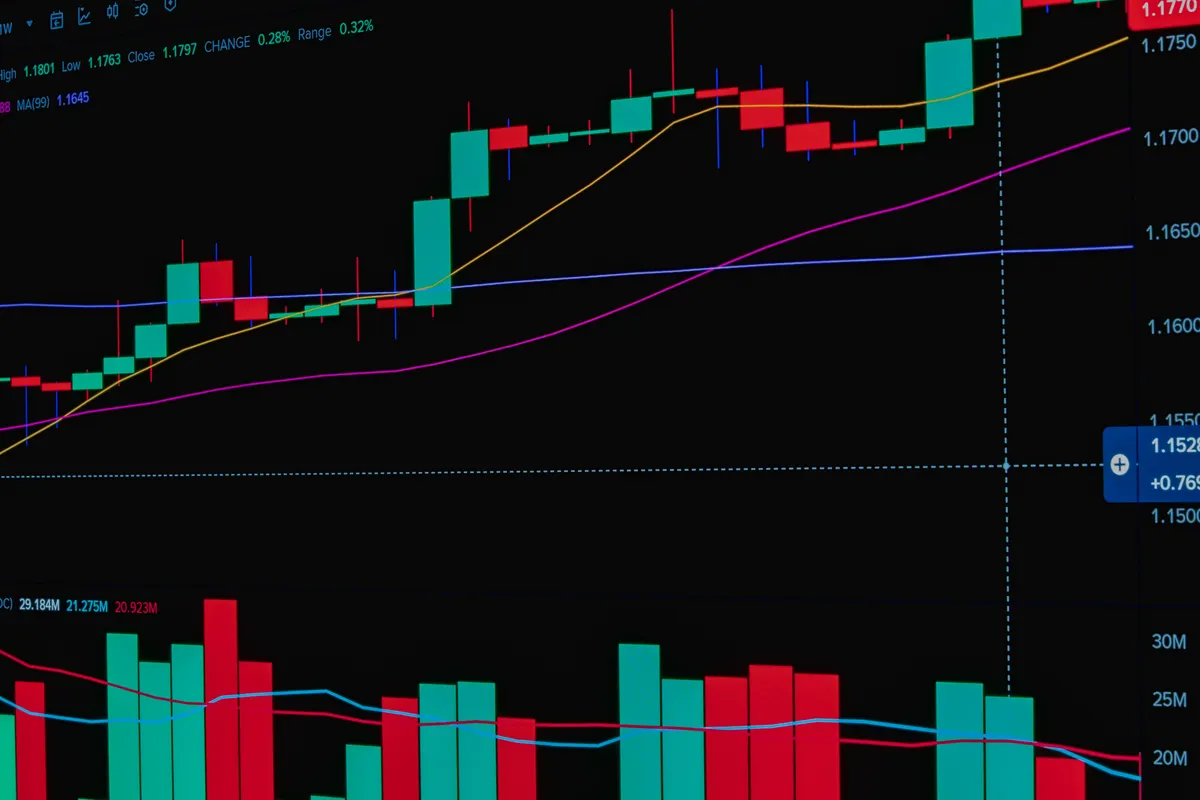
Aster AOS-2 Perpetual Listings Open Via 1M Token Stake and Validator Vote


Aster AOS-2 perpetual listings are now live, replacing private exchange negotiations with a staked, validator-gated public process that locks 1 million ASTER for four years before any new perp market can go live.
The framework, announced via an 11 August X post, covers the full lifecycle of a new perpetual contract: eligibility checks, token staking, an on-chain validator vote, a risk-team configuration stage, and a market-maker preparation phase before trading begins, according to FinanceFeeds. The T+1 listing target kicks in only after that entire sequence completes.
Applicants that fail the validator vote get their full 1 million ASTER back. The four-year lock therefore applies exclusively to projects that clear the vote, not as a non-refundable listing fee. Aster has not disclosed the voting period length, the approval threshold, or when returned tokens become available.
Aster retains direct control over leverage and margin parameters regardless of the validator outcome. Risk settings will be published and each decision recorded on-chain, but the platform’s risk team configures every contract before it reaches the market-maker preparation stage.
Aster AOS-2 Perpetual Listings Add Another Staking Demand for ASTER
The 1 million ASTER requirement lands on top of existing tokenomic pressure. In June, Aster committed to using 99% of daily fees for open-market buybacks while burning reserves to reduce total supply from 8 billion to 3 billion ASTER. A separate 50,000 USDT charge for permissionless spot listings already directs proceeds toward buybacks and veASTER staker rewards.
AOS-2’s deposit mechanism is structurally different from the spot-listing fee: the perpetual stake is held in escrow and returned on rejection, meaning it functions more like collateral than revenue. Aster has not confirmed whether the locked tokens earn rewards, carry governance rights beyond the listing vote, or face slashing conditions if a listed market later breaches platform rules.
The size of the barrier will move with price. At current levels, 1 million ASTER is a meaningful capital commitment for smaller teams, and the cost in dollar terms rises proportionally with any ASTER appreciation. Aster has not said whether applicants can delegate the stake, source tokens through third parties, or consolidate multiple proposals under a single lock.
AOS-2 follows AOS-1, which opened spot-token listings via published eligibility conditions. The exchange previously relied on direct partnerships for perp additions: in April, Aster became the first decentralised venue to list a GENIUS perpetual contract, a deal that also included a $200,000 ASTER trading reward pool.
Perp DEX Market Share Has Quadrupled, but Hyperliquid Dominates
Aster is entering a segment that has rewritten its own competitive map over the past 18 months. The CoinGecko 2026 State of Crypto Perpetuals Report found that perp DEXes lifted their share of open interest from 3.6% in early 2025 to 13.5% in early 2026, with top-12 DEX monthly average trading volume rising to $611.57 billion in 2026 from $531.65 billion in 2025.
That growth is heavily concentrated. Hyperliquid held 39.5% of perp DEX trading volume, 59.1% of open interest, and 63.4% of total value locked among DEXes as of 30 April 2026, per the same CoinGecko report, ranking it ninth overall by volume and fifth by OI. Newer platforms Pacifica, Extended, and Variational each held roughly 4%, 4%, and 3% market share respectively in April 2026, ahead of Jupiter and dYdX. Centralised exchanges still dominate the broader market: Binance and OKX accounted for 33% and 15% of total perp activity in the first four months of 2026.
CFTC Action Brings Perp Futures Onshore, but Offshore Platforms Stay Outside Its Scope
AOS-2 does not resolve Aster’s regulatory position for US users. On 29 May 2026, the Commodity Futures Trading Commission (CFTC) approved a bitcoin perpetual futures contract at KalshiEX LLC, a designated contract market, and issued a no-action letter permitting Coinbase Financial Markets, Inc., a registered futures commission merchant, to allow US customers to post digital commodities as margin with its affiliated foreign board of trade, Deribit FZE, per the CFTC’s press release 9241-26.
The 29 May package included four coordinated releases: the KalshiEX order, a Policy Statement published in the Federal Register on 3 June 2026 at 91 Fed. Reg. 33,160, CFTC Letter 26-17, and a joint staff advisory on 24/7 trading, clearing, and settlement, according to the National Law Review. The approval is scoped to perpetuals referencing bitcoin and other digital commodities with deep, active, continuous spot markets; it does not extend to other asset classes or provide cover for unregistered offshore platforms offering leveraged crypto derivatives to US customers.
Aster’s 11 August announcement made no reference to CFTC registration, country-level access restrictions, or whether any AOS-2-approved markets would be available to US residents.
AOS-3 is next in sequence. Aster has not published its rules or a timeline, which means the framework’s final shape, and how aggressively projects queue to stake 1 million ASTER, remains open until that announcement lands.

Shawon Hannan
Shawon Hannan is a crypto markets writer at CryptoNexa. He covers DeFi protocols, layer-1 and layer-2 development, staking and restaking economics, tokenomics and the on-chain data behind the day's headlines. His reporting focuses on mechanism rather than narrative: how a protocol actually works, where the risk sits, and what the flows show. He tracks exchange reserves, TVL, funding and governance activity, and treats every figure as something that has to be traceable to a chain, a filing or a named analyst. He writes on protocol upgrades, exchange and ETF flows, regulation and market moves.