
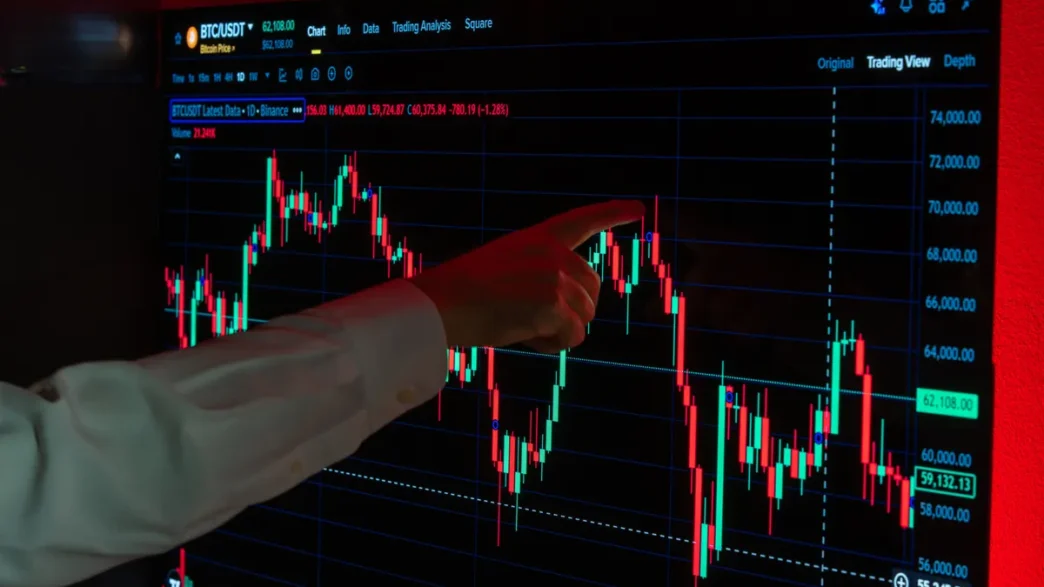
XRP ETF inflows collapse to just $1.01 million for the week ending 8 August 2026, a 93% drop from $14.86 million the prior week, and the timing is awkward: Ripple moved 50 million XRP worth $50.5 million to an unidentified wallet on 13 August, Binance futures open interest hit a 30-day high, and whale wallets absorbed over 380 million tokens in a single session. Three distinct groups are placing three conflicting bets.
The Ripple Transfer and What the RL18-VN Wallet History Suggests
The sending address, identified on-chain as RL18-VN, is a known operational wallet that Ripple has used to route XRP toward financial institutions, exchanges, and On-Demand Liquidity corridors. The receiving wallet had already accumulated 150 million XRP earlier in August before the 13 August transfer landed. Within hours, 1 million of those tokens moved to a Binance-linked address. The remaining 49 million have not moved.
Three explanations circulate. First, institutional custody onboarding: Ripple announced partnerships with DXC Technology, Kyobo Life Insurance, and Thailand’s Kbank in the first half of 2026, all involving Ripple Custody infrastructure that requires pre-positioned XRP for settlement testing or wallet provisioning. Second, RLUSD minting support: Ripple’s dollar-backed stablecoin now sits at roughly $1.78 billion in market capitalisation across more than 40 blockchain networks, and large XRP movements have historically preceded minting surges on the XRP Ledger. Third, operational selling: Ripple has been transparent about using XRP sales to fund operations, and a transfer to an intermediary wallet followed by an exchange deposit fits that pattern.
On-chain data confirms movement, not intent. According to Ripple’s own investor data, as of 30 June 2026, the company held 37,656,053,914 XRP, with 32,600,000,000 XRP in escrow. The monthly escrow mechanism releases 1 billion XRP on the first of each month before re-escrowing 600 to 800 million of it, a pattern confirmed by June’s release of 1 billion XRP across three transactions.
XRP ETF Inflows Collapse, Then Reverse: What the Flow Data Actually Shows
The week ending 8 August was the worst for spot XRP ETFs since launch, with net assets across the seven US products slipping to $964 million. For context, May 2026 saw $131.94 million in monthly inflows, the strongest month of the year, and a single day in May drew $25.8 million after Ripple closed a $200 million debt facility and completed a tokenised US Treasury pilot on the XRP Ledger with JPMorgan, Mastercard, and Ondo Finance, per CoinDesk.
The August drought did not hold. According to BeInCrypto, the week ending 28 August saw $110.49 million in net inflows, the strongest single week of 2026 by a wide margin, pushing cumulative net inflows to $1.66 billion and total net assets to $1.44 billion. Fund-level data from crypto.news shows Bitwise leading with approximately $542 million in cumulative inflows, followed by Canary Capital at roughly $468 million and Franklin Templeton at $434 million. Trading volume hit a record $125 million on 20 August.
The pattern reframes the 8 August figure. What looked like structural withdrawal was, at least partially, a trough before a reversal. Whether the reversal is durable depends on what the Senate does with the CLARITY Act after returning on 14 September.
Derivatives Positioning and the Leverage Overhang
Binance XRP futures open interest reached 435.1 million tokens on 12 August, a 30-day high with a Z-Score of approximately 1.20. Across all exchanges, total open interest stood at 2.67 billion XRP, a notional value exceeding $2.7 billion, more than double the $964 million sitting in ETF products at the trough. The derivatives market is structurally larger than the regulated spot market for XRP.
Funding rates lean slightly positive, suggesting a marginal long bias, but not decisively. The risk is asymmetric and mechanical: if XRP clears the $1.05 level that held as support until 6 August, short liquidations could accelerate a move toward $1.10. A break below $1.00 risks flushing longs into the $0.90 range, a level not tested since early 2026. The Binance buildup represents a roughly 19% rise in open interest in just over a week.
Whale Accumulation Versus Retail Apathy
Large holder outflows from Binance account for 91% of total exchange outflows, the highest concentration since 2024. Mid-tier whale wallets, addresses holding 10 million to 100 million XRP, have added roughly 1.23 billion tokens year-to-date. On 11 August alone, whales absorbed more than 380 million XRP when the price tested $1.00. Tokens are moving to cold storage, not being recycled to exchanges.
Retail participation has cratered. Google search interest for XRP sits near its 2026 low, and social engagement metrics tracked by Santiment and LunarCrush show declining mention volumes. XRP’s January 2026 peak of $2.41, identified by 99Bitcoins, is already a distant memory; the token sits roughly 71% below its broader cycle high of $3.65 from July 2025. Large holders accumulating during retail apathy is a pattern crypto markets have seen before. It is not a guarantee of what comes next.
The binary setup is in place: the CLARITY Act’s Senate floor vote (or absence of one) after 14 September is the sharpest near-term catalyst. Polymarket’s contract for the bill to be signed into law by year-end sat at approximately 14% after the Senate missed its pre-recess window. If Senate leadership signals the bill is a priority in the fall calendar, prediction markets will move first, and XRP’s price will follow.