
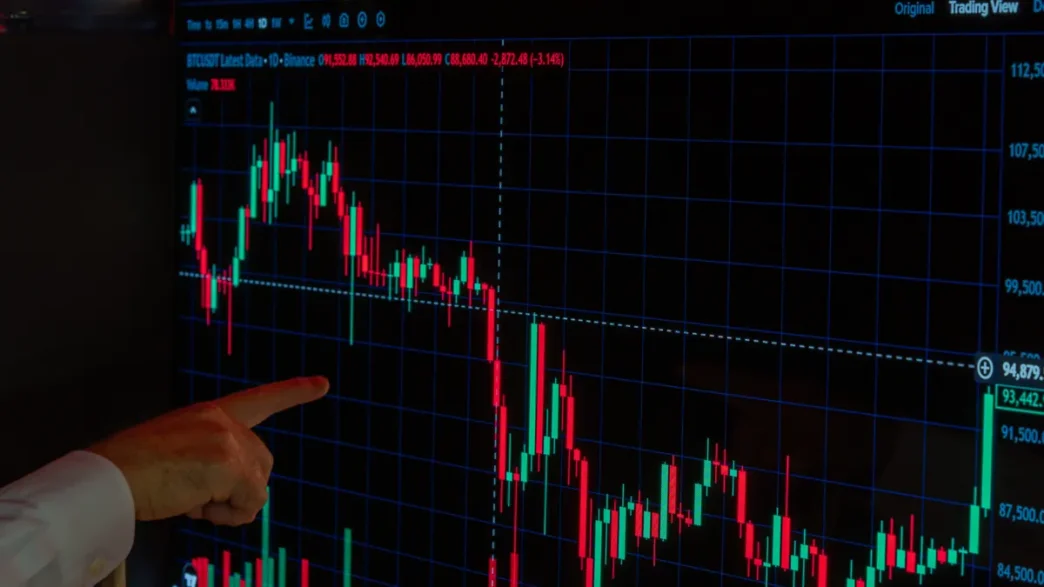
The Bitcoin $72,000 short squeeze that played out on 19 and 20 August was the week’s defining move: a run from around $64,100 to above $72,000 that forced more than $3 billion in leveraged closures across major derivatives venues, while regulators and institutions pressed ahead with separate but equally consequential developments.
How Bitcoin’s $72,000 Short Squeeze Unfolded
Short positions accounted for approximately $2.77 billion, or 92%, of the forced closures. Binance recorded roughly $518 million in liquidations; Hyperliquid processed around $513 million.
The macro catalyst was the U.S. Treasury’s decision to increase the maximum size of long-dated bond buyback operations from $2 billion to at least $4 billion per operation. That shift in liquidity conditions gave the move enough fuel to run. The scale of the Bitcoin $72,000 short squeeze reflected deeply crowded short positioning heading into the announcement.
Ethereum followed. ETH climbed above $2,400 and hit an intraday high of $2,448 on 21 August after gaining more than 20% on the week. U.S. spot Ether ETFs drew $189 million on 19 August, their strongest daily inflow since October. The four-hour RSI reached 86 as of 21 August, placing ETH in overbought territory against resistance near $2,450.
SEC Exemptions, CLARITY, and the CFTC’s Contingency Plan
The Securities and Exchange Commission (SEC) proposed two registration exemptions under what it is calling Regulation Crypto Assets. One pathway covers raises of up to $5 million over four years; the other allows up to $75 million during a 12-month period. A conditional safe harbour could let a qualifying crypto asset exit investment-contract treatment once it meets specified conditions. The comment window runs 60 days; nothing is live yet.
President Trump called for a ‘fair version’ of the CLARITY Act at a White House event on 19 August, attended by executives from Coinbase, Gemini, Ripple, Chainlink Labs and others. The bill would divide digital asset oversight between the SEC and the CFTC. Senate negotiations remain deadlocked over ethics provisions, DeFi rules, and stablecoin rewards ahead of a 15 September procedural vote requiring 60 votes to advance.
CFTC Chair Michael Selig said the agency would continue preparing crypto market-structure proposals regardless of whether Congress passes the bill, though he did not specify their content or publication dates. Under existing law, the CFTC can regulate derivatives and pursue spot commodity fraud; routine supervision of crypto spot exchanges requires new legislation.
Citi, Securitize, and Institutional Infrastructure
Citi unveiled its Custody+ platform and expects to begin offering institutional digital asset custody later in 2026, starting with Bitcoin. The platform places cryptocurrency and traditional securities within a shared framework covering real-time settlement, liquidity services, and market data. Citi said more than 80% of its asset-servicing events are already processed in real time. No precise launch date or client names have been disclosed.
Securitize (NYSE: SECZ) launched the HINC tokenised fund with Neuberger Berman as subadvisor. Neuberger Berman manages more than $230 billion in assets across its broader platform. HINC invests primarily in high-yield bonds with additional exposure to collateralised loan obligations and leveraged loans, and issues interests across Avalanche, Ethereum, Solana, and Sui.
Per Securitize’s launch announcement, Securitize Capital LLC serves as investment adviser, while Securitize Markets, LLC, an SEC-registered broker-dealer operating an alternative trading system, handles distribution to eligible investors. The HINC fund page states the fund targets T+1 settlement on liquidations, though actual settlement may fall on T+2, T+3, or later depending on underlying liquidity. Access is limited to accredited investors and qualified purchasers.
FASB, Swift, and the Rest of the Week
The Financial Accounting Standards Board (FASB) proposed three conditions under which qualifying stablecoins could be presented as cash equivalents without amending the existing GAAP definition: direct on-demand redemption rights, one-to-one reserves, and segregated accounts holding short-term, highly liquid assets. The FASB had been working through stablecoin accounting diversity since at least October 2025. Comments close 19 November.
Swift, HSBC, and Standard Chartered completed the first live interbank transaction on Swift’s blockchain-based ledger, linking the two banks’ separately operated tokenised deposit platforms. Seventeen banks across six continents are in the broader pilot; no commercial launch date has been set.
XRP gained 17% and hit $1.43 intraday as Ripple voted in favour of the PermissionDelegationV1_1 amendment on the XRP Ledger. Seven of 35 default validators are on board, well short of the 80% support threshold that must hold for two continuous weeks before the amendment can activate. Ethena’s ENA surged roughly 65% to near $0.145 after Ethena and FalconX opened a $1 billion overcollateralised lending facility using assets backing USDe; the four-hour RSI reached 93.97 at the rally’s peak. Solana Company opposed governance proposals to accelerate disinflation and alter network fees, warning the disinflation plan could cut projected issuance by 18.9 million SOL over six years.
The 15 September CLARITY Act procedural vote, still 14 votes short of the threshold it needs, is the next hard deadline worth watching.