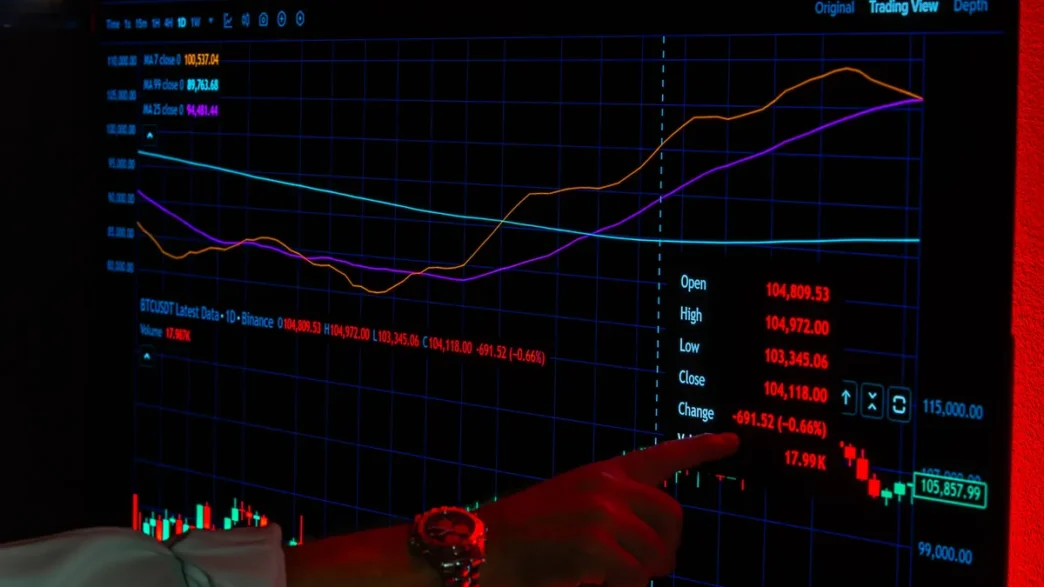
Webull Canada crypto trading is now live, built on Coinbase’s Crypto-as-a-Service infrastructure, with Coinbase supplying liquidity, trading technology and custody while Webull retains the client relationship. The launch adds Canada to a crypto footprint that already includes the United States, Australia and Brazil.
Webull Canada’s platform currently lists 10 cryptocurrencies, including BTC, ETH and SOL, with additional assets indicated as available. The crypto offering sits alongside stocks, ETFs and options already accessible to Canadian retail clients.
How Webull Canada Crypto Trading Is Structured
The arrangement is asset-light for Coinbase: it takes the back-end role across trading infrastructure and custody, while Webull faces the customer. Yahoo Finance describes the model as a potentially scalable revenue opportunity for Coinbase as brokers, banks and fintech platforms look to bolt on crypto capabilities without building custody and liquidity rails themselves.
Michael Constantino, CEO of Webull Canada, framed the rationale plainly: ‘Canadian investors expect access to a growing range of asset classes, and crypto has become an increasingly important part of that mix.’
What the OSC Data Actually Shows
Webull cited Ontario Securities Commission (OSC) research showing digital asset ownership has risen to 25% of Canadians this year, up from 10% in 2023. The underlying survey tells a fuller story.
The OSC’s 2025 crypto asset survey, which sampled 2,360 Canadians, found that 59% are now aware of crypto assets. Among investors specifically, 39% hold some form of crypto product, and 30% of those with financial advisors own crypto, the adviser channel is no longer a wall.
Forward-looking sentiment has moved sharply. According to the OSC’s full survey report, 38% of Canadians aware of crypto assets said they were highly likely to purchase in the future, up 18 percentage points from 2023. Confidence in execution has followed: 30% of respondents now report high confidence in their ability to buy and sell crypto assets, roughly double the share recorded previously.
The tokenisation angle is also visible in the data. Of Canadians who are aware of tokenised real-world asset (RWA) tokens, 74% said they would likely consider investing in them over the next year if their main bank or investment firm offered access. That is a number every incumbent wealth platform will have noticed.
Canada’s Stablecoin Framework Takes Shape
The regulatory backdrop is moving in parallel. Canada’s Stablecoin Act was introduced as Division 45 of Part 5 of Bill C-15, implementing provisions of the November 2025 federal budget. Bill C-15 received Royal Assent on 26 March 2026, establishing the Act as framework legislation, according to Gowling WLG. Draft regulations and public consultation are expected through the remainder of 2026, with an anticipated in-force date of Q1 2027.
The Bank of Canada will administer the regime. Under the framework, as outlined by Cozen O’Connor, issuers will be required to register with the Bank of Canada, maintain adequate reserves, publish redemption policies and meet risk management and privacy standards. Administration is funded at $10 million over two years from 2026, with ongoing costs to be recovered from regulated issuers.
Beyond prudential compliance, Stikeman Elliott notes the framework leaves open the possibility of future integration with Canada’s Real-Time Rail (RTR) national payment system, which would give compliant stablecoins a lane into mainstream payment infrastructure.
For Webull, the timing is deliberate. Launching into a market where retail ownership has more than doubled in two years, adviser adoption is climbing, and a federal stablecoin framework is weeks into its post-Royal-Assent consultation period is not a coincidence. The Q1 2027 in-force date for stablecoin regulation is the next marker: what Webull Canada’s asset list looks like on that date will say more about the partnership’s ambitions than the current ten-coin lineup does.