Bitcoin CME Futures Gaps Target $75K–$80K as BTC Shrugs Off Hormuz Shock

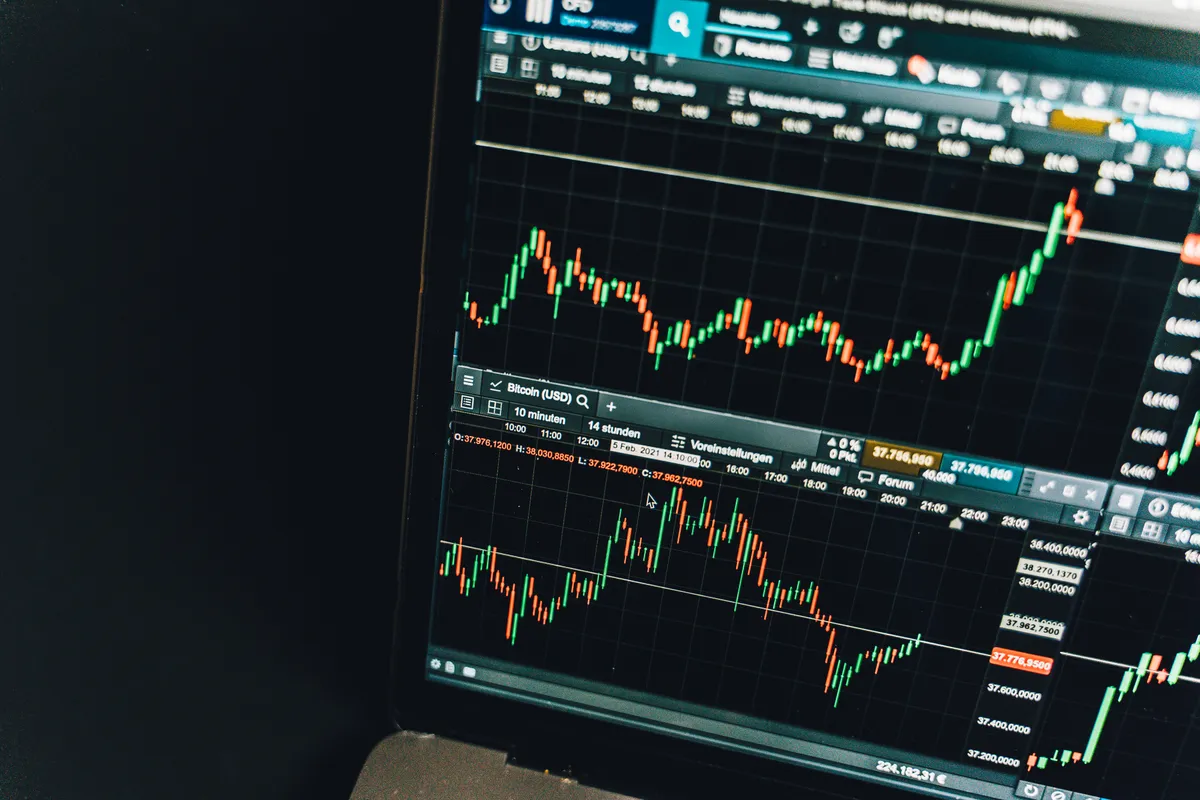
Bitcoin CME futures gaps between $75,000 and $80,000 are back in traders’ sights after BTC held above $63,000 on Thursday, shaking off a Strait of Hormuz closure and the hottest US producer-price print in nearly four years.
Data from TradingView showed BTC/USD hitting an intraday high of $63,200 on Bitstamp, up more than 2.5% on the day, even as geopolitical and inflation risk piled up simultaneously.
Hormuz Closure and PPI Data Compound Risk-Asset Pressure
Iran closed the Strait of Hormuz ‘until further notice’ following attacks on US infrastructure in the Gulf states. Around 100 million barrels of oil transit that route, and WTI crude jumped above $91 per barrel on the news.
US President Donald Trump warned Iran would be hit ‘very hard’ on Thursday evening, adding in a Truth Social post: ‘At some point in the not too distant future, we will be taking Kharg Island, and other oil infrastructure points, and assume total control of their Oil and Gas Markets, much like we have with Venezuela, which is working out brilliantly for both Venezuela and the United States of America.’
Trading firm QCP Capital, in its Wednesday Market Color bulletin, wrote that markets were ‘being forced to price both military escalation risk and potential energy disruption risk at the same time.’ It added: ‘That combination leaves risk assets in an awkward position. Investors may not be panicking, but they are clearly less willing to lean into exposure when the next headline could pull the market in either direction.’
On the inflation side, the Bureau of Labor Statistics (BLS) May 2026 PPI release confirmed that prices for final demand less foods, energy, and trade services rose 0.8% in May, the largest single-month advance since March 2022, when the index climbed 0.9%. Year-on-year, that core measure is up 5.1%, the biggest 12-month rise since the 5.5% reading in October 2022.
Nearly 80% of the May headline advance was driven by a 2.8% surge in the index for final demand goods, with prior monthly gains running at 1.1% in April and 0.7% in March. The goods-led acceleration is the part of the PPI print that feeds most directly into forward CPI estimates.
The May CPI release from the BLS showed the headline consumer measure at 4.2% year-on-year, its highest since April 2023. Energy drove the upside: the energy index rose 23.5% for the 12 months ending May. Food added further pressure, up 3.1% over the same period. The combination keeps the Federal Reserve in a difficult position and gives risk assets one less tailwind.
Bitcoin CME Futures Gaps Point to $75K–$80K
Despite the macro backdrop, attention in Bitcoin circles remained focused on a set of unfilled CME futures gaps. A CME gap forms when the futures price at Friday’s close diverges from Sunday’s open price, because CME Group Bitcoin futures, unlike spot BTC, do not trade around the clock. Weekend and maintenance-window moves in spot markets create price discontinuities that traders historically watch as mean-reversion targets.
Each CME Bitcoin futures contract covers 5 BTC and is cash-settled, with the front-month contract’s 52-week range spanning $59,275 to $127,240. The outstanding gaps in the $75,000–$80,000 zone sit well above current price but within the upper half of that annual range.
Crypto trader Michaël van de Poppe framed the path succinctly for his X followers: ‘It’s quite simple for Bitcoin. Break through the areas at $63.3K and $65.8K and we’ll be looking at a lot more upside.’ Those two levels are the immediate hurdles; clearing them is the precondition van de Poppe sets before the gap-fill thesis becomes relevant.
The $60,000 level remains the floor bulls need to hold. A weekly close below it would undercut the recovery narrative and push the gap-fill scenario into a much longer timeframe. The first real test is whether BTC can convert the $63,200 intraday high into a confirmed weekly close above $63,300.

Sammie Heid | Cryptonexa
Sammie Heid is an Austin-based crypto journalist covering DeFi, NFTs, and on-chain analysis. Independent reporter since 2019. UT Austin '18. Luna survivor.