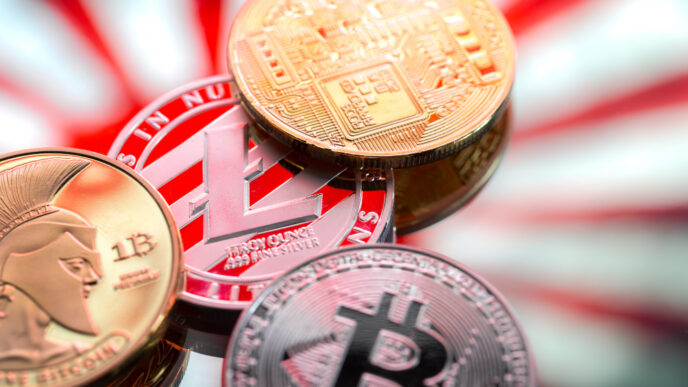

Bitcoin crashed into the real world in 2021. El Salvador made it legal tender. Three years later, hardly anyone uses it to buy coffee.
Bitcoin payment adoption remains stuck in low gear despite regulatory wins and billions in infrastructure investment. Survey data reveals the gap between ownership and actual spending. The 2025 National Cryptocurrency Association found that 39% of crypto holders used cryptocurrency to shop for goods and services. Sounds impressive until you realize that includes one-time purchases—someone who bought a flight ticket once counts the same as daily users.
The bitcoin payment adoption story gets murkier when you separate Bitcoin from stablecoins. Dollar-pegged tokens now dominate crypto payment flows, particularly for business transactions and cross-border transfers. Bitcoin takes a backseat.
Why the disconnect?
Measuring Bitcoin payments is harder than tracking Visa swipes. No global statistics exist for Bitcoin used at checkout. Analysts rely on fragmented indicators: consumer surveys, payment processor data, state-level experiments, app-based Lightning systems.
Three different cases exist. Paying directly with Bitcoin onchain or through Lightning. Paying with Bitcoin that converts to fiat in the background. Paying with stablecoins or other crypto assets. Each case tells a different adoption story.
Merchants complicate the picture further. Most don’t hold the Bitcoin they receive. Payment processors convert BTC to local currency instantly so merchants avoid price risk. From the buyer’s view, they paid with Bitcoin. On the merchant’s end, it looks like a regular bank transfer.
Crypto cards blur the line even more. Someone uses a Visa card backed by crypto. The merchant receives fiat through normal channels. Spending funded by crypto but not a true Bitcoin payment.
**The El Salvador Experiment: Legal Status Isn’t Enough**
El Salvador provided the cleanest test case for bitcoin payment adoption at scale. The country made Bitcoin legal tender nationwide in 2021, creating mandatory acceptance for private businesses. Government incentive programs followed.
Retail adoption never materialized. Only a fraction of citizens used it for regular transactions. Businesses that accepted BTC reported minimal volumes. Most users converted government incentives to cash immediately.
Why did bitcoin payment adoption fail in the one country that mandated it?
Volatility made pricing brutal for buyers and sellers. Merchants had zero compelling reason to encourage Bitcoin payments when existing options worked fine. Usability problems persisted for non-technical users. The Lightning Network—essential for small everyday purchases—remained too complex for average consumers.
Early 2025 brought the reversal. Businesses gained the right to refuse Bitcoin payments as part of an IMF agreement. Bitcoin payments remain legal for taxes and state bills. Private commerce? Optional.
That decision reveals the ground truth. Legal tender status by itself doesn’t build consumer payment habits, especially when traditional payment methods function without friction.
**Survey Data: Occasional Use, Not Regular Spending**
The National Cryptocurrency Association survey showed 39% of crypto holders used crypto for shopping. GM Global Cryptocurrency Insights conducted in 2024 found 11% actively use crypto for purchases while 19% expressed interest.
These numbers suggest a sizable minority tried crypto payments at least once. But surveys don’t separate Bitcoin from other assets. They don’t track frequency. One purchase in 2024 counts the same as weekly spending.
The distinction matters enormously. Occasional experimentation differs fundamentally from payment adoption. Someone who bought an airline ticket with Bitcoin once isn’t driving merchant acceptance. Someone who spends Bitcoin weekly might be.
Payment processor data reveals where Bitcoin payments actually happen. Transaction volumes run higher in online commerce than physical retail. Average purchase amounts exceed typical retail transactions. Categories cluster around travel, luxury goods, digital services, electronics.
Basic economics explains the pattern. Crypto payments make sense for large cross-border transactions where card fees add up and international buyers are common. They make less sense for buying groceries.
Stablecoins dominate merchant crypto payment systems. Dollar-pegged tokens are simpler to record and convert than holding Bitcoin. Whether B2B or P2P transactions, Bitcoin’s share of crypto payment activity may not be the largest.
**Lightning Network: The Infrastructure Bitcoin Needs**
If Bitcoin works as everyday money, the Lightning Network is essential. Lightning enables near-instant, low-cost payments. Makes small transactions feasible where onchain fees would kill viability.
But Lightning brings new measurement difficulties. Many transactions stay off the main blockchain. Total volumes are hard to track.
Some apps facilitate Lightning payments without users directly holding Bitcoin. The user pays in local currency. The app converts to Bitcoin behind the scenes. The merchant receives Bitcoin via Lightning.
To the merchant, it counts as a Bitcoin payment. To the user, it feels like scanning a QR code. This approach lowers friction but blurs what “paying with Bitcoin” actually means.
**Where Bitcoin Payments Make Actual Sense**
Bitcoin payment adoption appears mainly in specific economic niches rather than everyday consumer spending:
Cross-border small business payments. Exporters, online merchants, freelancers bypass international bank delays, currency controls, high intermediary fees. Fast settlement matters more than volatility since funds convert quickly.
Travel and high-value online purchases. Airline tickets, hotel bookings, electronics appear frequently in crypto payment reports. Card fees add up for these purchases and international buyers are common.
Donations and censorship-resistant funding. Nonprofits, activists, humanitarian groups use Bitcoin when traditional payment systems face regional shutdowns or political restrictions. Bitcoin donations reach recipients globally within minutes.
Remittances in certain corridors. Stablecoins lead most crypto remittance flows. Bitcoin still plays a role where local on-ramps exist and recipients convert easily.
Gift card and voucher systems. Many people spend Bitcoin by buying gift cards or prepaid vouchers indirectly. Not direct merchant acceptance but a real way consumers spend.
Local circular economies. Small communities around Bitcoin meetups, tourism areas, coworking spaces demonstrate local usage. These cases are genuine but remain tiny in scale.
Back in 2010, 10,000 BTC bought two pizzas. That first commercial Bitcoin transaction proved the network could handle real-world trade, not just peer-to-peer transfers. Fifteen years later, the infrastructure improved dramatically while everyday adoption stayed niche.
**The Bottom Line: Specialized Tool, Not Universal Money**
No exact global number exists for Bitcoin payments. Any precise user count deserves skepticism.
The evidence supports these conclusions:
Among crypto holders, a substantial minority tried crypto for payments. Not regularly though. Everyday Bitcoin payment use remained low even in countries that encouraged it. Merchant acceptance exists but payment volumes concentrate in certain sectors and regions rather than broad retail.
Stablecoins now handle the rising portion of crypto payments instead of Bitcoin, particularly for business transactions. Bitcoin functions today as specialized payment infrastructure, not universal consumer money.
**What Could Actually Move the Needle**
Future bitcoin payment adoption depends less on theory and more on infrastructure development.
Key milestones to watch: Apps that hide crypto wallets and private keys from users. Merchant tools that integrate Lightning without added complexity. Clear regulations on crypto payment settlement and accounting. Competition between Bitcoin systems and stablecoin networks.
If paying with Bitcoin becomes as simple as scanning a QR code in a familiar app, usage may climb. That depends on regulatory frameworks and market conditions evolving in Bitcoin’s favor.
For now, bitcoin payment adoption remains concentrated where Bitcoin solves practical problems better than traditional methods. Cross-border transactions. Large purchases. Censorship-resistant funding. Not your morning coffee run.
Question is whether infrastructure improvements can bridge that gap or whether stablecoins capture the everyday payment market Bitcoin once hoped to dominate.