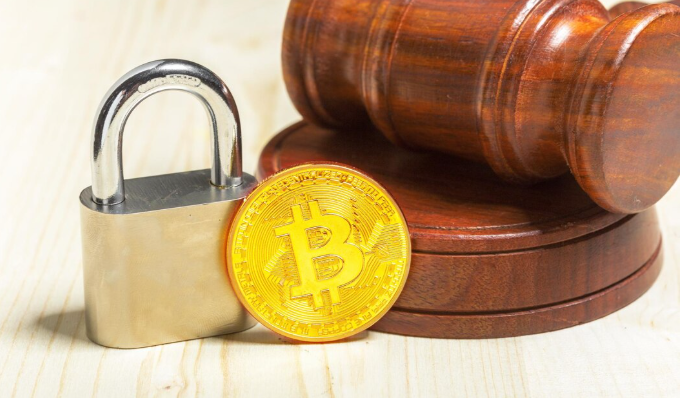
On a chilly February afternoon in Islamabad—the kind of winter day when the Margalla Hills are just barely visible behind government buildings—the announcement was made. Officials from the Pakistan Crypto Council discussed moderation more than opportunity in a conference room at the Finance Ministry. The message was straightforward: the first step is to create a new security framework.
That tone is important. The establishment of the Pakistan Virtual Assets Regulatory Authority and the opening of a regulatory sandbox to test digital asset products under supervision are two examples of Pakistan’s unexpectedly quick progress over the past few months.
| Category | Details |
|---|---|
| Authority | Pakistan Virtual Assets Regulatory Authority (PVARA) |
| Related Body | Pakistan Crypto Council (PCC) |
| Finance Minister | Muhammad Aurangzeb |
| CEO, PCC | Bilal Bin Saqib |
| Key Initiative | Regulatory Sandbox for Virtual Assets |
| Focus Areas | Tokenization, Stablecoins, Remittances, On/Off-Ramps |
| Official Reference | https://www.arabnews.pk/node/ |
The sandbox shows ambition by permitting experiments with tokenization, stablecoins, and remittances. However, as a number of council members have privately implied, ambition can surpass boundaries.
It seems purposeful for the Government Crypto Council to insist on security. It follows a year of fast institutional development, including the creation of new Digital Asset Authorities, technical committees, and draft legislation. There’s a feeling that the nation doesn’t want to make the same mistakes that have happened in other places, where exchanges have crashed and left ordinary investors stranded while numbers disappear from their screens over night.
You can sense the stakes when you stroll through Karachi’s financial district at dusk. Young developers, who are certain that Pakistan could surpass traditional finance, congregate in co-working spaces to create decentralized apps and blockchain payment tools. The nation’s ninth-place global adoption ranking appears to indicate inevitability, according to investors. However, security flaws such as money laundering dangers, lax compliance, and unclear custodial arrangements loom in the background.
The council’s prudence may not be the only reason for its caution. Global financial watchdogs continue to monitor Pakistan, and conforming to FATF standards is mandatory. Tension arises when anti-money laundering measures are strengthened while cryptocurrency access is increased. It’s more difficult than news reports indicate to promote innovation while controlling risk.
Participants reportedly discussed the composition of an independent regulatory body at a recent council meeting. Attendees reported that the room was split between consolidation and acceleration. Global capital, according to some, is impatient. Others called for discipline after looking at case studies of failed exchanges overseas. It’s difficult to overlook the careful use of phrases like “long-term belief” and “sovereign reserve” as you watch this unfold.
The story was further fueled by Pakistan’s announcement of a Strategic Bitcoin Reserve run by the government. Digital assets held in state custody convey assurance, even defiance. However, it’s still unclear if symbolic gestures correspond with institutional preparedness. Reserves are strong declarations. Frameworks require more effort.
In itself, the regulatory sandbox is a cautious experiment. Businesses can test stablecoins and tokenized assets under supervision, using monitored on-ramps to convert fiat to digital tokens. Before giving complete approval, that structure is intended to monitor behavior. It seems that regulators are interested in how these systems handle stressors like sudden demand, liquidity constraints, and volatility spikes.
Building “future-ready” infrastructure has been a public priority for Finance Minister Muhammad Aurangzeb. Although the phrase conveys optimism, the unglamorous aspect of that future is security. It takes time to strengthen governance frameworks, create compliance guidelines, and coordinate between the Securities and Exchange Commission and the State Bank of Pakistan. essential labor.
Regulation of cryptocurrencies has been inconsistent worldwide. Despite turmoil, El Salvador accepted Bitcoin as legal tender. India is still a restrictive country. China completely outlawed trade. Pakistan seems to be taking a middle ground, formalizing the ecosystem while maintaining control. It feels like a delicate balancing act.
Investors who trade cryptocurrency on mobile apps in Lahore and Karachi frequently discuss opportunities rather than compliance. Regulation is seen by some as validation. Others fear going too far. A certain amount of skepticism permeates the atmosphere: will stringent security regulations impede progress? Or will they boost self-assurance?
The council might have a more comprehensive understanding. While institutional trust moves slowly, cryptocurrency markets move quickly. Public opinion could be quickly changed by a breach, a significant fraud case, or a systemic failure. Although establishing credibility now might not be as exciting as introducing new tokens, it could decide whether digital assets become widely used or stay on the periphery of speculation.
There is, however, actual pressure for innovation. Stablecoins are seen by developers creating remittance platforms as a lifeline for Pakistanis living abroad who want to send money home. Maintaining low transaction costs while enhancing compliance is a challenging task. When there is too much friction, users turn to unofficial channels.
The Government Crypto Council’s position, which prioritizes security, seems to have been made subtly and without much fanfare. A pause, not a retreat. an understanding that trust is just as important to digital finance as code and money.
It is unclear if this framework will ultimately spur or impede growth. However, as dusk falls outside the ministry buildings, one feels that this is a pivotal moment. Calculation is replacing the rush. The catchphrases are becoming more structured.
And that caution may be the most ambitious action of all in a nation where financial volatility is a lived reality rather than an abstract concept.