


The transparency of the Bitcoin blockchain is genuinely unsettling, but not in the way that detractors complain about surveillance. Anyone with an internet connection can view every transaction that has ever occurred on the Bitcoin network. Every wallet address, coin movement, and address transfer is stored in a public ledger that anyone on the planet can access at any time. Your name is irrelevant to the blockchain.
It is unaware of your existence. However, it keeps a permanent and detailed record of everything you do with your money that no bank has ever been able to. This leads to an odd phenomenon that has become a minor obsession within the on-chain analytics community: the ability to observe massive amounts of Bitcoin being moved by anonymous actors of extraordinary size, compare the timing of those movements to market price history, and draw conclusions that everyone seems to find compelling but no one can quite verify.
In July 2025, a total of 80,009 BTC, then valued at about $8.6 billion, were moved by eight Bitcoin wallet addresses that had been silent since 2010—the year when Bitcoin was worth less than a dollar and miners were doing so more out of technical curiosity than financial calculation.
Two of those wallets were especially closely monitored: two addresses that had not moved a single satoshi since receiving 10,000 BTC each in April 2011 at a price of $0.78 per coin. On the same day, they transferred their holdings to new addresses and activated within thirty minutes of one another.
Dormant Bitcoin Wallets — Key On-Chain Activity Data
| July 2025 Mass Activation | 8 wallets woke up — 80,009 BTC total moved · dormant since 2010 · ~$8.6 billion |
| Key Wallet Pair (Jul 2025) | Two wallets, 10,000 BTC each · activated within 30 minutes of each other · original value $7,800 in Apr 2011 · current value ~$1.1B each |
| Appreciation (14 years) | +13,982,800% — from $0.78/BTC to ~$110,000/BTC |
| September 2025 Activity | 400 BTC wallet (12 years dormant) moved to multiple new addresses · originated from early mining rewards ~2010 |
| September 11, 2025 Event | 444 BTC wallet (13 years dormant) activated · current value ~$5 million |
| Concurrent Asset Rotation | Separate whale converted ~$4B in BTC to ETH from original ~$5B BTC holdings — same period |
| Bitcoin Pseudonymity | All Bitcoin transactions traceable on-chain · wallet ≠ identity · ownership anonymous without KYC link |
| Transaction Pattern | Funds moved from legacy address format to modern lower-fee format — technical upgrade, not sale signal |
| Market Interpretation | Analysts divided: profit-taking vs. asset reorganization vs. security upgrade · no direct sell signal confirmed |
| Blockchain Transparency | All Bitcoin transactions permanently recorded and publicly viewable — immutable, decentralized ledger |
Each wallet’s initial $7,800 investment had grown to about $1.1 billion. The transfer’s motivations are still a mystery. The owner’s identity is still a mystery. The technical format of the receiving addresses suggested an upgrade from an older, less efficient Bitcoin address standard to a newer one, which some analysts read as housekeeping rather than preparation to sell. This is possible because the blockchain is transparent about these things even when it is silent about everything else. Others weren’t as certain.
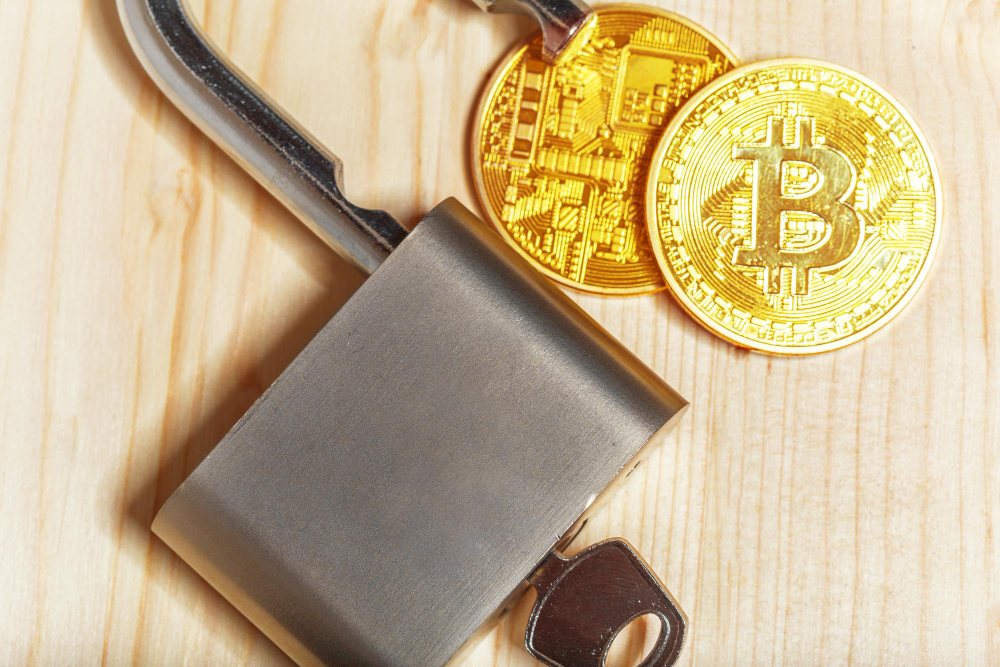
On-chain analysts spend a lot of time attempting to decipher this pattern. A wallet that has remained unaltered during several complete cycles of the Bitcoin market, including the peak and collapse in 2017, the COVID crash in 2020, the all-time high in 2021 and the ensuing 70% decline, the FTX implosion in 2022, and the harsh winter that followed, suddenly moves. The discussion is sparked by the timing of that movement in relation to the price history.
When a wallet that has been inactive for more than ten years activates close to what seems to be a local price peak, the question of whether or not someone knew something is almost automatically raised. After thirteen years of perfect patience, did they look at the chart, determine that the time was right, and act? Or is the timing coincidental—a necessary consequence of the fact that dormant wallets can only activate occasionally and that the price history of Bitcoin is a sequence of sharp fluctuations that any given activation can reasonably be mapped onto?
Another wallet, which had been inactive for almost thirteen years and contained 444 BTC, or roughly $5 million at the time, transferred its contents on September 11, 2025. A 400 BTC wallet, which represented early mining rewards from the network’s first year of existence and had been silent since about 2010, moved its holdings to several new addresses two weeks later. Analysts referred to these coins, which came from a miner’s output fifteen years prior, as a “rare historic flow of early Bitcoin.” Around the same time, a different big player—not one of the dormant wallets, but an active whale—converted about $4 billion of a roughly $5 billion Bitcoin position into Ethereum. This massive asset rotation garnered a lot of attention of its own. The concentration of activity during that short period of time was so remarkable that it seemed less like a coincidence and more like a coordinated reevaluation of positioning by several highly skilled actors working independently of one another but coming to similar conclusions at roughly the same time.
Watching on-chain data at times like these gives you the impression that you are reading a document written in a language where the words are obvious but the meaning is debatable. The blockchain explains exactly what transpired: on this date, 10,000 BTC were transferred from address A to address B, permanently and verifiably recorded. It is unable to explain why, who, or what will happen next. The on-chain analytics community uses probabilistic reasoning—historical precedent, pattern recognition, and comparison to prior activation events—to break that silence. A few of those analyses have shown promise. Others have happened by accident. Because of the small sample size, the market is influenced by numerous factors at once, and confirmation bias—the propensity to remember instances where the timing was uncanny while forgetting instances where it wasn’t—is a very real distortion in how these patterns are perceived, it is impossible to evaluate the track record rigorously.
The circumstances surrounding the wallet activations in 2025 are what make them so intriguing. For the majority of the year, Bitcoin had been trading comfortably above $100,000, which by all accounts would have made the long-dormant wallet holders extremely wealthy. They held through a 70% decline without moving, demonstrating that the 2022–2023 bear market had not spurred them to action. Additionally, it didn’t seem that the return to new heights had spurred them to take immediate action. The primary interpretive issue that the public record is unable to address is figuring out what threshold was crossed in the middle of 2025—security upgrade, estate transfer, tax optimization, profit-taking, or something completely different. Some of these old wallets might be the property of deceased individuals whose private keys are only now being handled by their heirs or estate administrators. They may be affiliated with organizations that have been gradually strengthening their positions. They might belong to people who just waited.
An ideal record of what transpired is the Bitcoin blockchain. Just as anonymous as the wallets themselves is the explanation for why.


