


Rows of ASIC mining rigs hum nonstop in a sizable warehouse somewhere in the Iranian city of Semnan, using subsidized electricity produced from natural gas that would otherwise be released into the atmosphere. Anyone who has visited a Bitcoin mining facility in Kazakhstan or Texas will recognize the continuous, industrial noise.
What makes this particular operation different is not the hardware or the process but the context: the country running it has been cut off from the global dollar system, its central bank cannot process international wire transfers, its currency has lost more than 90% of its value since 2018, and its people routinely exchange Iranian rials for anything that holds value better — gold, dollars obtained on the black market, and increasingly, Bitcoin. The price target is not an arbitrary figure when a country in that situation observes Bitcoin approaching $100,000 per coin. It is the difference between sustained economic suffocation and significant hard currency reserves.
One of the more genuinely fascinating geopolitical stories of the last five years is Iran’s relationship with Bitcoin, mainly because it has developed covertly while the majority of Western coverage of the nation has concentrated on military tensions and nuclear negotiations. In 2019, the Iranian government took the somewhat unusual step of formally legalizing Bitcoin mining as an industrial activity, issuing licenses and establishing a regulatory framework that allowed mining farms to operate openly with access to cheap electricity.
Iran & Bitcoin — Sanctions, Mining, and Economic Context
| Iranian Rial Collapse | Lost ~90%+ of value since 2018 reimposition of U.S. sanctions · one of history’s sharpest currency collapses |
| SWIFT Exclusion | Iran cut off from international dollar-clearing system · cannot conduct most cross-border transactions in USD |
| Iran’s Bitcoin Mining | Licensed since 2019 · government-authorized mining farms · estimated 4–7% of global Bitcoin hash rate at peak |
| Energy Advantage | Heavily subsidized electricity · some of world’s cheapest power costs · natural gas flaring repurposed for mining |
| Strategic Use Case | Bitcoin used to purchase imports, circumvent sanctions, and accumulate dollar-equivalent reserves outside U.S. reach |
| Bitcoin Price at $100K Significance | Each mined Bitcoin worth ~$100K represents major hard currency gain for a country locked out of global finance |
| Other Sanctioned Nations Using Crypto | Russia, North Korea, Venezuela — all documented using Bitcoin/crypto to route around financial isolation |
| Iran’s Annual Mining Output (est.) | Hundreds of millions in Bitcoin annually · exact figure disputed but economically significant |
| Geopolitical Parallel | Similar to how nations accumulated gold reserves in 20th century as hedge against dollar dominance |
| Key Risk | Bitcoin’s volatility — asset that lost 70%+ in 2022 is poor reserve currency if price collapses during crisis |
Ideological fervor for decentralized finance was not the driving force. It was practical: the country was sitting on enormous natural gas reserves that it could not efficiently export due to sanctions, its power grid was heavily subsidized anyway, and Bitcoin mining offered a way to convert stranded energy into digital assets that could be used internationally without touching the SWIFT banking system that the United States had spent years weaponizing against Tehran. The reasoning was simple. At the time, most outside observers did not realize how ambitious the execution was.
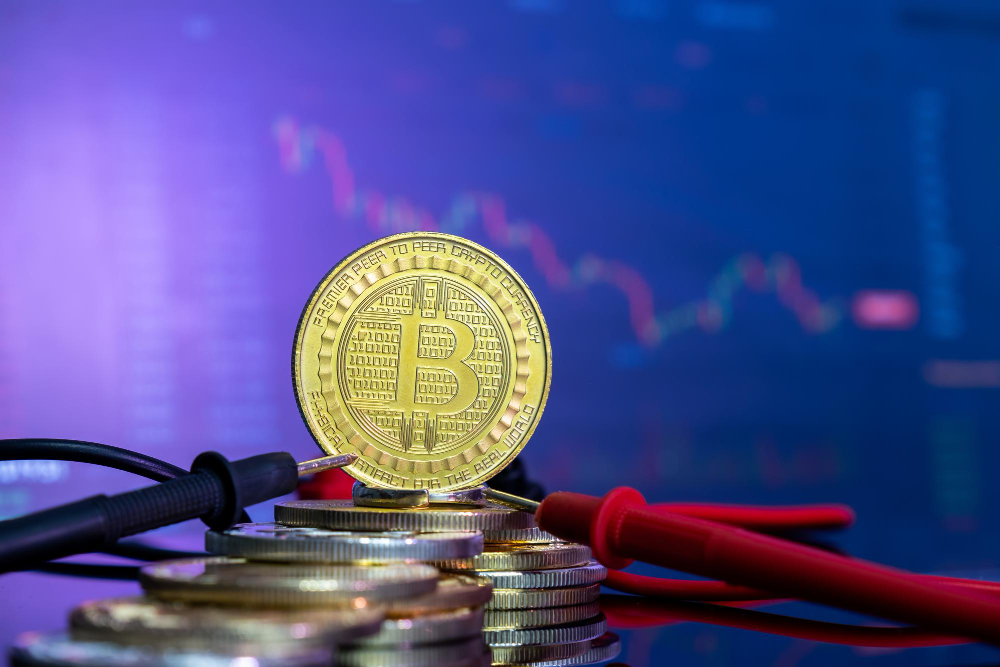
$100K Bitcoin Price
Iran was estimated by researchers to have contributed between 4% and 7% of the global hash rate of Bitcoin, or the total amount of processing power used to mine the network, at its height. For a single nation, especially one that faces severe resource limitations and international scrutiny, that is a significant share. When the mining output was valued in dollars, it amounted to hundreds of millions of dollars in hard currency equivalent that were transferred outside of regular trade routes each year.
That is a significant amount for a government attempting to pay foreign contractors, buy imports, and sustain economic activity in the face of complete financial isolation. The U.S. Treasury Department has sanctioned certain wallets and intermediaries involved in turning Iranian-mined Bitcoin into goods and services, so it is also no secret that some of those coins have been used specifically for that purpose.
The $100,000 price range is significant to this tale in a way that makes it worthwhile. Each unit of output from an Iranian mining farm represents a significant but modest store of value at $10,000 per Bitcoin. The same coin is worth ten times as much in dollars at $100,000, and the mining operation’s overall strategic calculations change. A mid-sized Iranian mining farm’s yearly production, which at lower prices might have been worth $5 million in hard currency, is now worth $50 million at $100K.
That is the distinction between a truly significant parallel financial system and a marginal sanctions workaround. It’s possible that this is one reason certain geopolitical actors — not just Iran but Russia, which dramatically expanded its Bitcoin mining presence after the 2022 invasion of Ukraine and subsequent sanctions, and North Korea, which has become one of the most prolific crypto theft operations in the world — have an interest in Bitcoin price appreciation that goes well beyond the typical retail investor’s motivations.
Of course, the “Iran needs Bitcoin at $100K” thesis has a simple counterargument, and any sincere analysis must address it. In about a year, Bitcoin lost over 70% of its value in 2022. A reserve asset that drops from $65,000 to $17,000 while you are trying to use it to purchase imported goods is not a reserve asset in any meaningful sense — it is a speculative position that happens to be liquid. Although the Iranian rial has experienced catastrophic volatility, at least its decline has been steady and gradual enough for economic planning. Bitcoin’s price history contains single-day moves of 20% or more in both directions, which creates enormous operational difficulty for any institution trying to use it as functional currency rather than as a hedge. The country that bets heavily on Bitcoin staying above $100,000 is making a bet that has proven incorrect before and could prove incorrect again.
Watching this dynamic unfold over several years, there’s a feeling that Iran’s approach to Bitcoin represents something broader than one country’s financial workaround. It is an early, imperfect, and somewhat desperate version of a question that more countries are beginning to ask quietly: what happens to national economic sovereignty when one country controls the reserve currency and uses that control as a foreign policy instrument?
The answer that Iran has stumbled toward — converting energy into digital assets that exist outside any single nation’s control — is crude and carries significant risk. However, the underlying reasoning is not absurd. It is the same logic that drove countries to accumulate gold through most of the twentieth century, updated for a world where physical gold is harder to move and easier to seize at borders. The $100,000 Bitcoin prediction is either a desperate prayer from a cornered economy or a genuinely farsighted assessment of where global monetary power is heading. Both interpretations have merit, and the truth is that it will probably take another ten years to determine which was correct.


