When it’s cold outside and there aren’t many streetlights in early January, there’s something strangely reassuring about going outside. The only requirements for the Quadrantid meteor shower are patience, carefully layered warmth, and a small amount of faith that something brilliant might briefly split the sky open.
The Quadrantids arrive swiftly and depart almost without warning, in contrast to the Geminids or the Perseids, which build slowly and stay for many nights. Even that window can feel like a tease at times, as their peak can only last for six hours. The best part of the show is over by the time most people remember to look up.
| Key Detail | Description |
|---|---|
| Event | Quadrantid Meteor Shower |
| Peak Activity | January 3–4, 2026 |
| Visibility | Northern Hemisphere, best viewed pre-dawn facing northeast |
| Radiant Location | Near Boötes constellation (formerly Quadrans Muralis), near Big Dipper |
| Origin | Asteroid 2003 EH1, not a comet |
| Meteor Characteristics | Fast, bright, blue or white trails; occasional long-lasting fireballs |
| Viewing Challenge 2026 | Coincides with a full Wolf Supermoon, significantly reducing visibility |
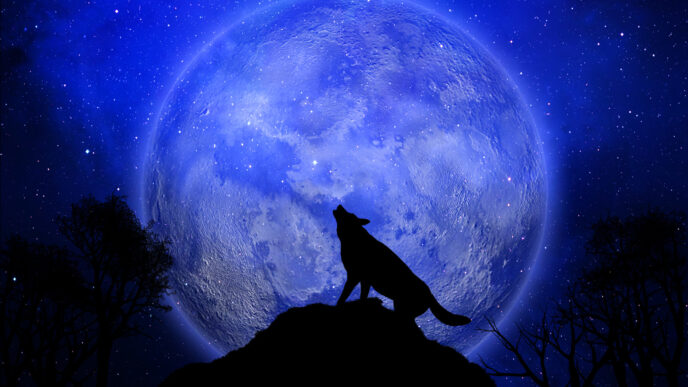
2026 presented a unique test of optimism this year. The sharp peak of the shower, which was bright, almost blinding, and remarkably effective at washing out anything faint or fleeting in the sky, fell directly beneath a full Wolf Supermoon. Both hobbyists and astronomers found this overlap to be annoyingly predictable. It is difficult to ignore a supermoon. It creates shadows in your backyard. Even experienced stargazers are drawn to it.
Nevertheless, the Quadrantids continued to provide for those who put in the work—going to darker hillsides, keeping the moon behind them, and patiently waiting during the predawn lull. Naturally, they weren’t at their peak, but they were still sufficient to capture a few sharp fireballs that flared across the northeastern sky.
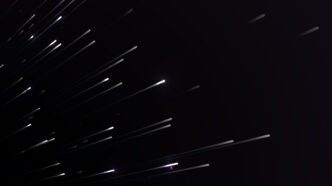
These meteors are especially swift, traveling more than 25 miles per second through the upper atmosphere. Some look white-hot, while others are shockingly blue. Every now and then a bright one lingers, leaving a glowing trail that gradually fades away like breath in cold air.
They are also unique due to their origin. The majority of meteor showers originate from comets, which are dusty remnants that travel elliptical routes and release debris. However, the Quadrantids can be traced back to 2003 EH1, an asteroid that may have once been a comet but is now a rocky body that has left behind enough loose matter to seed this yearly storm.
One year, from a frozen soccer field on the outskirts of town, I watched the Quadrantids. Even though the cold was almost unbearable, I was struck by how the meteors seemed more dramatic and urgent because they only happened so infrequently and for such a short time.
One aspect of the appeal is that feeling of uniqueness. If you miss the peak, you have to wait a full year to try again. And that’s presuming a radiant is in a good position before dawn, clear skies, and no full moon. On paper, the shower is among the most intense, and if you’re in the right place at the right time, it can even rival the Geminids in hourly rate.
Many observers weren’t in 2026. Frustrated social media feeds: pictures of the supermoon with few meteor trails. One post talked about giving up on the Quadrantids completely and just sitting in a backyard, silently gazing at the bright orb. It said, “It’s still nice.”
The reward was unadulterated for those who managed to catch a glimpse. In defiance of the odds, bright fireballs sliced through the moonlight with startling clarity. Their short trails were a silent reminder that, despite unfavorable circumstances, some things are still worthwhile pursuing.
Despite their briefness, the Quadrantids are especially helpful for experienced skywatchers because they are predictable. Early on January 4, the radiant rises high enough in the sky, particularly from mid-northern latitudes. Even though the moon can compete, the brightest meteors cannot be completely eliminated. Additionally, the Quadrantids require focus, in contrast to the longer-duration showers where pacing may lull viewers into passivity. Either you’re present or you’re not.
A dozen or more shooting stars per hour could be visible if you pay close attention during that brief window, which is usually between 2 a.m. and dawn. This is especially true when the moon dips low or passes behind thin clouds. Photographing or even sharing this event in real time is difficult. It’s more elusive and intimate.
Its elusiveness contributes to its mystique. The constellation Quadrans Muralis, which is no longer visible on contemporary star charts, is the source of the Quadrantids’ name. This January spectacle is the only remnant of their legacy. A name that has been forgotten and a brief flash of light. That contains poetry.
Some amateur astronomers were still able to derive significance from the experience by strategically planning—tracking the shower’s peak, identifying the radiant, and reducing light interference. The northeastern quadrant provided just enough room to see motion, brief but unmistakable, according to one observer, while the majority of the sky remained dark under the moon’s intense glare.
For the rest of us, just trying was sufficient. We are connected to a wider rhythm even when we are unable to see the Quadrantids due to cloud cover or the moon. Every January, like clockwork, the Earth travels through the same debris field as it swings and spins through space. It is a checkpoint in space. A sign of the passing of time.
It doesn’t always produce the spectacle we want, but that’s part of its enduring appeal. This event isn’t meant to wow audiences or fill social media feeds. It’s not as loud. More slowly. frequently overlooked.
However, the Quadrantids provide a short-lived reward for those who show up—curious, covered in coats, eyes straining against light pollution. A remnant of an older entity that continues to orbit and burn its mark into our atmosphere.
And I felt strangely satisfied as I stood beneath that excessively bright sky this year and saw just one clear meteor. The effort itself has merit. For looking up when staying inside is more convenient.