The odd thing about the “Maria Julissa Mencho” story is how fast it changed from being a rumor to acting more like a verdict. Mexico is taking in the news that Jalisco New Generation Cartel leader Nemesio “El Mencho” Oseguera Cervantes was killed in a military operation. Then, like an exhibit label that no one bothered to check, the name of a young influencer appears everywhere, stapled to the story.
It started with an official-sounding detail: Mexican authorities claimed that they were able to locate the hideout thanks to surveillance of a romantic partner. When combined with the mechanics of a manhunt, reports portray Tapalpa, Jalisco, as a wooded, cabin-filled getaway area that looks so appealing in pictures that it almost feels offensive. According to officials, the meeting prepared the ground for the raid, and a trusted individual escorted the partner to the property.
| Field | Details |
|---|---|
| Person in the spotlight | Maria Julissa (Mexican influencer / OnlyFans creator, per news reports) |
| Why her name trended | Rumors falsely linking her to “El Mencho” after authorities said a romantic partner was tracked |
| What she said | She publicly denied involvement; called the claims false/unfounded and urged people to rely on official sources |
| Cartel leader referenced | Nemesio Oseguera Cervantes, known as “El Mencho,” CJNG leader (killed in a military operation, per officials) |
| Official detail that fueled it | Mexican defense officials described tracking a romantic partner to Tapalpa, Jalisco |
| Authentic reference link | Associated Press report on the operation: https://apnews.com/article/62c9d513c871e01df1c132ca8defb1a9 |
People tend to lean forward when they see details like that. It’s personal. Plot twist, isn’t that right? It’s also possible that social media made it impossible to resist: if there is a “romantic partner,” the internet can undoubtedly identify her, meme her, accuse her, and “explain” her. The search for background soon became a search for a face.
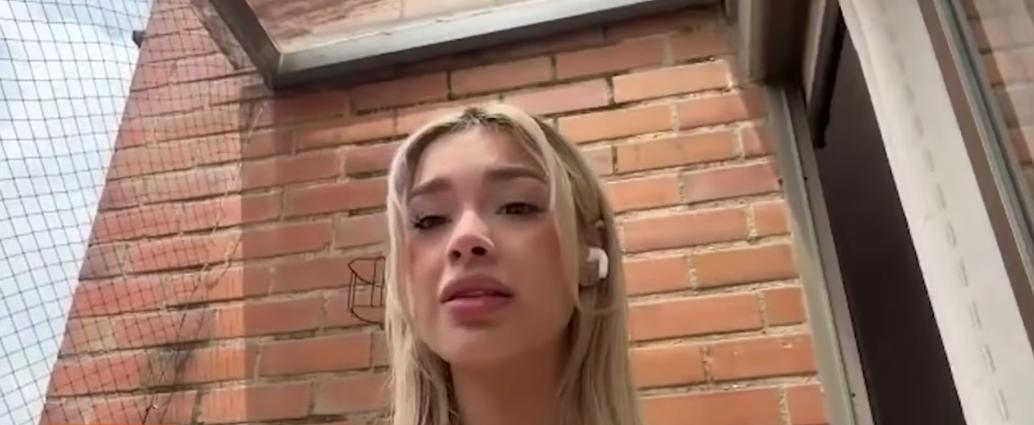
That face, at least on the internet, was Maria Julissa. She was portrayed in some posts as the girlfriend who “led” Mencho’s authorities. Others used dramatic language that read more like streaming-TV promo copy than fact, suggesting a betrayal, a “honey trap,” a financial reward, or even a threat to her life. A few outlets pointed out that the claims were being accompanied by AI-generated or manipulated images, a contemporary accelerant that gives false certainty an oddly visual and thus “real” feel.
Then came the denial, which had the tired clarity of someone who knows that your mentions can become a threat map on the internet. Maria Julissa claimed she was unrelated to the matter, denounced the information as unfounded and misleading, and cautioned that misinformation can be harmful. The statement lacked ingenuity. When someone is attempting to remove their name from a moving train, they say something like that.
One is tempted to treat denial as a simple “response” rather than the main point of the story, particularly during viral moments. The denial is significant in this case, though, because the accusation was never supported by verified evidence in the first place; rather, it was based only on the discrepancy between what the public wanted (a named person to blame) and what officials claimed (a romantic partner was tracked). Because authorities did not publicly identify the tracked partner in the manner that the internet attempted to do, it is still unclear who she was.
The backdrop in the real world, meanwhile, was anything but digital. Following Mencho’s death, reports detailed cartel retaliation, including roadblocks, burning cars, armed attacks, and disruptions that extended across states and into routine tasks. There is a harsh, smoky sameness to the images and videos from those times: choked highways, dark plumes rising, people circling back home because the road ahead is no longer a road.
This is where the gossip about Maria Julissa becomes something more repulsive. Being wrongly connected to an operation or to “snitching” is not only embarrassing in cartel contexts. It might be harmful. Additionally, the informal tone of the internet (“did she betray him?”) begins to seem careless, the digital equivalent of calling someone by name in the wrong bar.
It also suggests a more general change that keeps happening: social media makes a limited operational detail shared by law enforcement seem like a morality play, and the easiest “character” to cast is someone who already has an audience. Observing the cycle, one gets the impression that virality now functions similarly to a shadow justice system—confident, quick, and frequently incorrect.
Pretending to know more than we actually do is not necessary for any of this. The facts, as they stand, are obvious: authorities detailed following a romantic partner to Tapalpa; prominent media outlets said Maria Julissa was implicated in online rumors, which she vehemently denied. Silence doesn’t trend, so the rest is the internet filling it with stories.