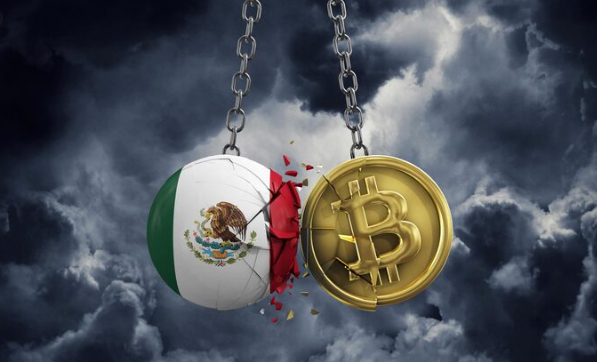

The financial and technology establishment has been living in slow motion for the better part of fifteen years, witnessing Bitcoin defy every forecast of its impending collapse and reach a market capitalization that now routinely surpasses a trillion dollars. There is a certain quality to being confidently, publicly, and costly wrong about something. All of the quotations are recorded. It was referred to by Warren Buffett as “rat poison squared.”
Over the course of several years and interviews, Jamie Dimon referred to it as a “fraud” and a “decentralized Ponzi scheme.”Calling it “one of the crazier speculative things” he has seen, Bill Gates declared he would short it if he could. These weren’t extreme viewpoints. These came from three of the most reputable, well-respected, and attentive individuals in the worlds of technology and finance. It seems that Bitcoin was not paying attention.
| Asset | Bitcoin (BTC) — the world’s first and largest cryptocurrency by market capitalisation; dismissed as a fraud, scam, or speculative bubble by some of the most prominent figures in global finance and technology |
|---|---|
| Current Market Cap (2025–26) | Regularly exceeding $1 trillion — making Bitcoin larger by market value than most of the world’s major corporations and comparable to the GDP of several mid-sized nations |
| Jamie Dimon’s Position | JPMorgan Chase CEO repeatedly called Bitcoin a “fraud” and a “decentralised Ponzi scheme” across multiple years of public statements — while JPMorgan’s own clients continued to hold and trade it |
| Warren Buffett’s Position | Berkshire Hathaway CEO described Bitcoin as “rat poison squared” and “nonproductive” — arguing it has no intrinsic value and would eventually go to zero; has not publicly revised the view |
| Bill Gates’s Position | Microsoft co-founder called Bitcoin “one of the crazier speculative things” and stated he would short it if he could — later moderating to concern about its environmental impact rather than its fundamental existence |
| Bitcoin’s Price at Peak Criticism | Many of the strongest dismissals came when Bitcoin was trading between $5,000 and $20,000 — the asset has since reached well above $90,000 per coin in 2025 |
| Institutional Reversal | BlackRock, Fidelity, and major banks now offer Bitcoin ETFs and custody services — a structural shift that would have seemed implausible during the peak years of establishment dismissal |
| Historical Parallel | Early internet dismissals by established media and business figures in the mid-1990s followed a similar pattern — authoritative skepticism followed by large-scale adoption that made the skeptics’ quotes permanently quotable |
Because the dismissals came from people who had truly earned the right to hold strong ideas on value, they were particularly impactful. By choosing businesses with genuine profits, genuine goods, and genuine competitive advantages, Buffett transformed Berkshire Hathaway into one of the most resilient investment vehicles in American history.
His critique of Bitcoin, which holds that it generates no revenue and can only be worth what the next buyer is prepared to pay, is not irrational. In actuality, it is the foundation that has worked well for him over the past 60 years in practically every other asset class. The thing that didn’t fit was Bitcoin, and instead of looking at the framework, he chose to label it as incorrect. That discrepancy might have a significant impact on how history documents the call.
Dimon’s stance has been the most obviously difficult to uphold, in part because his bank, JPMorgan, has continued to provide customers with Bitcoin-related services during the years he was denouncing it as a scam. The bank began offering Bitcoin futures access, custody services, and exposure through structured products, all the while its CEO was using language often associated with illicit businesses to describe the commodity.
When questioned about the conflict, Dimon tends to characterize it as meeting customer demand rather than personal endorsement. This is a fair difference, but it gets more difficult to make as the bank’s Bitcoin-related revenues increase. Although he has refrained from formally changing his previous stance, he has softened his tone in recent years.
The story’s most telling aspect is probably the institutional reversal. The largest asset manager in the world, BlackRock, introduced a Bitcoin ETF in early 2024 and saw billions of dollars in inflows in a few of weeks. BlackRock operates with a degree of regulatory and reputational prudence that makes it a reasonable proxy for mainstream financial establishment thought. Invesco, Fidelity, and a number of significant banks came next.
Now available in retirement accounts, the product Buffett likened to rat poison is held by the same organizations that took years to explain why it wasn’t appropriate for a serious portfolio. That change was not brought about by a change in Bitcoin. It occurred as a result of the money that followed being too substantial to ignore.
It’s difficult to ignore how much this pattern resembles the early internet skepticism of the mid-1990s, when well-known media personalities and corporate executives lined up to confidently explain why e-commerce would never replace retail, why the web would never replace newspapers, and why the whole thing was just a technological fad with no practical applications.
The quotations from that time period are still cited, primarily to warn against the authoritative rejection of ideas that don’t conform to preexisting mental paradigms. Critics of Bitcoin are creating the same type of archive. The question of whether this makes Bitcoin sound money or a highly profitable speculative asset with strong narrative momentum is still really open. The trillion-dollar figure, which keeps coming up no matter how the case is presented, is what is closed.