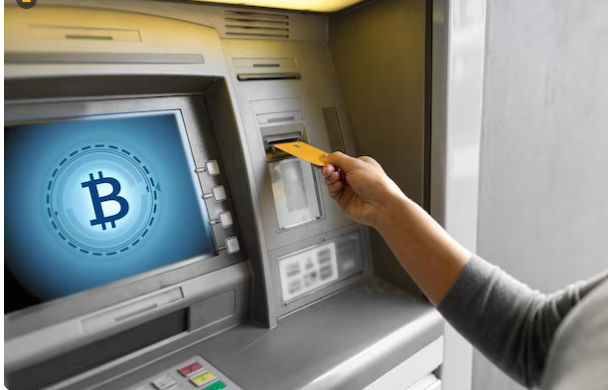
You can find one in practically every convenience shop or gas station in America; it’s a device that appears to be an ATM but isn’t. When you input cash, it transforms it into bitcoin and transfers it to a digital wallet. The transactions have become the chosen last step in a type of fraud that has cost Americans more than $110 million in 2025 alone because they are quick and, once completed, almost untraceable.
The victims are typically older. The machine at the gas station is where the pilfered money vanishes, and the scheme is usually complex, involving a phony government agency, a fraudulent tech support contact, and a convincing impersonator. On April 8, 2026, Wisconsin declared that the situation had reached a breaking point.
| Category | Details |
|---|---|
| Law | 2025 Wisconsin Act 226 — signed April 8, 2026; effective immediately |
| Daily Transaction Limit | $2,000 per user, per day at any crypto kiosk in Wisconsin |
| Mandatory Refunds | Kiosk operators must refund scam victims who report fraud to law enforcement within 30 days of the transaction |
| ID Requirements | Government-issued photo ID required; operators must photograph the user for every transaction |
| Warning Labels | “FRAUD ALERT” required on kiosk screens; machines cannot be placed within 5 feet of traditional ATMs |
| States That Banned Kiosks | Indiana (first outright ban); Tennessee (ban effective July 1, 2026); Hawaii (House Bill 1642) |
| Nationwide Losses (2025) | Over $110 million lost to crypto kiosk scams in the US in 2025 — primarily targeting elderly and vulnerable individuals |
| Federal Response | 119th Congress introduced the “Crypto ATM Fraud Prevention Act of 2025” — pending at federal level |
| Advocacy Groups | AARP actively pushing for crypto kiosk regulation in additional states alongside law enforcement agencies |
| Consumer Resource | Reporting and awareness at AARP Crypto Kiosk Scam Guide |
The governor of Wisconsin signed 2025 Wisconsin Act 226, which is one of the nation’s most stringent state-level crypto kiosk laws. It mandates that “FRAUD ALERT” warnings appear on the kiosk screen, caps transactions at $2,000 per user per day, requires operators to obtain a government-issued ID and take a picture of each user, and forbids machines from being positioned within five feet of a conventional ATM.
This proximity ban is intended to stop scammers from directing victims to a machine that looks exactly like the one they are accustomed to. Most significantly, operators are required by law to reimburse scam victims who disclose the crime to law police within thirty days. A significant change in the way the industry is expected to operate is represented by placing financial responsibility on the operators rather than just the victims.
Indiana became the first state to enact a complete ban on cryptocurrency kiosks after determining that the consumer protection math just didn’t work in the machines’ favor. Wisconsin’s approach is tough but not the strictest feasible. Tennessee then imposed its own prohibition, which is scheduled to go into force on July 1, 2026. House Bill 1642, which forbids cash-to-crypto transactions at kiosks, was enacted in Hawaii.
During the same legislative cycle, Virginia and a number of other states advanced their own regulatory regimes. The momentum is genuine and bipartisan, which is typically a sign that a policy concept is moving away from committee stalling and toward the mainstream. AARP has been aggressively lobbying in several states, and it has historically been a rather successful combo to have the nation’s largest senior advocacy organization working in tandem with police enforcement.
The 119th Congress proposed the Crypto ATM Fraud Prevention Act of 2025 at the federal level, which would establish nationwide guidelines for kiosk operators. Congress has historically struggled to advance crypto regulation, so it’s unclear if the measure will proceed through the legislative at a rate that keeps up with state-level action.
However, the fact that it exists at all is indicative of the volume of citizen complaints that lawmakers have been hearing. A political issue that transcends most partisan boundaries is elderly folks losing their retirement funds to a machine in a petrol station.
It’s difficult to ignore the fact that the kiosk business had years to self-regulate and, for the most part, did not. The machines are profitable, transactions happen quickly, and the operators have little legal motivation to increase friction that could lower throughput. That equation led to Wisconsin’s law and the prohibitions in Indiana, Tennessee, and Hawaii.
The number of residents who enter their state legislator’s office with a receipt they don’t understand and a tale they’re embarrassed to tell may have a greater influence on whether the remaining 46 states follow suit with regulations, prohibitions, or ongoing inaction than policy analysis.