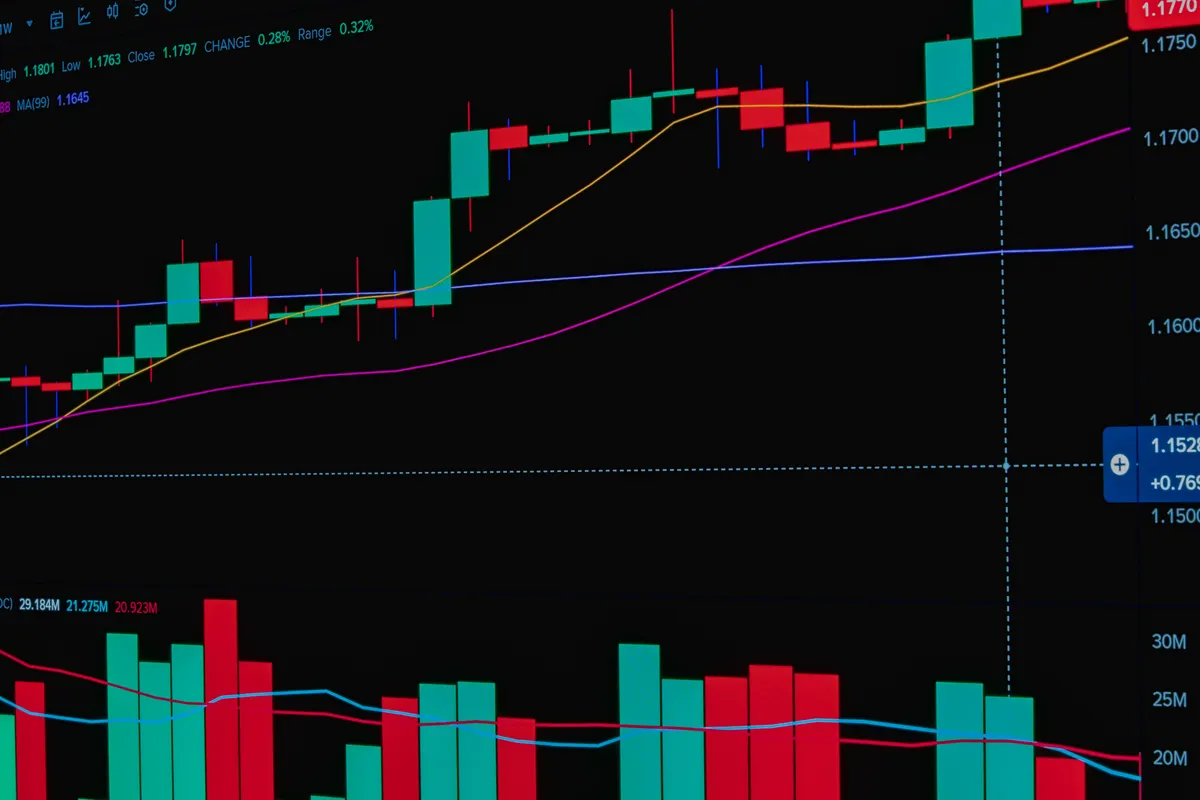
Strategy STRC Preferred Stock Crashes to Record Discount as Buyback Programme Launches


Strategy’s STRC preferred stock has crashed to a record low near $74, triggering a $1.0 billion buyback programme across its Digital Credit Securities and forcing a public reckoning with the capital structure Michael Saylor built around 847,363 Bitcoin.
The company disclosed the repurchase programme on 29 June 2026 in an SEC 8-K filing, covering STRC alongside three other preferred series: STRF, STRK, and STRD. The aggregate cap is $1.0 billion. It is the clearest admission yet that the preferred market has repriced Strategy’s credit risk in a way the variable-dividend mechanism was supposed to prevent.
The Three Legs of the Machine
Strategy, which rebranded from MicroStrategy in February 2025, built its structure on three interdependent pieces. Bitcoin is the reserve asset: it appreciates but generates no cash, so it cannot service obligations directly. MSTR common stock is the engine: when it trades at a premium to the underlying Bitcoin, issuing shares to buy more coins is accretive. And the preferred securities are the credit layer: instruments designed to raise cash against the Bitcoin narrative without touching the stack.
All three are under pressure simultaneously. Bitcoin has slid below $60,000, putting Strategy’s aggregate position roughly $12 billion underwater against an average cost near $75,650. CryptoQuant, as reported by CoinDesk, calculates the unrealized loss on purchases made in 2024, 2025, and 2026 specifically at $10.6 billion; the broader $12 billion figure in circulation likely captures older positions as well. MSTR has fallen below $100 for the first time in roughly two years, trading at a discount to the Bitcoin it holds. That discount inverts the accretion logic: raising $500 million at $50 per share requires 10 million new shares, against the 1 million shares the same raise needed at $500. Same cash, ten times the dilution.
One structural fact that has received less attention: Strategy’s preferred securities are not collateralised by its Bitcoin holdings. According to the company’s own disclosure on its STRC page, they carry only a preferred claim on the residual assets of the company. STRC holders cannot redeem against the Bitcoin treasury, which removes a bank-run dynamic but also means the preferred trades purely on confidence in the dividend stream.
The Strategy STRC Preferred Stock Crisis in Detail
STRC was engineered to hold near its $100 stated value via a variable dividend rate that rises when the price slips. The mechanism has not held. The stock touched around $74 intraday, roughly 26% below par.
The dividend rate for record dates beginning July 2026 has been raised to 12% annualised on the $100 stated amount, up from the approximately 11.5% cited in earlier reporting, according to Strategy’s official STRC disclosure. The company notes the rate is subject to monthly adjustment and that the cash dividend is not guaranteed.
The squeeze is straightforward on the numbers. As Strategy issued more preferred stock through the first half of 2026 to fund Bitcoin purchases, annual dividend obligations ballooned from roughly $300 million to approximately $1.2 billion, a near fourfold increase. At the same time, cash reserves fell 38%, partly because of a $1.5 billion repurchase of convertible debt in May. According to Strategy’s SEC filing covering the period to 21 June 2026, the US dollar reserve balance stood at $1.4 billion. Dividend coverage, measured as how long that reserve funds the obligations, collapsed from over seven years to approximately 14 months.
CryptoQuant head of research Julio Moreno, as reported by Yahoo Finance, argued that Strategy should develop ‘a systematic, fundamental-driven approach to bitcoin purchase timing rather than buying whenever capital is available,’ criticising the company for ‘buying at cycle tops and accumulating during bear markets,’ which he said resulted in ‘rapid unrealized loss growth and deteriorating STRC fundamentals.’ CryptoQuant calculated that restoring a healthy 24 months of coverage would require rebuilding reserves to roughly $2.8 billion, against the $1.4 billion currently held.
Saylor’s Defence and the Hard Choices Ahead
Saylor’s public rebuttal centres on scale: Strategy’s Bitcoin and cash exceed its outstanding debt by roughly $48 billion, and the company has raised more than $60 billion since 2022. His historical reference point is 2022, when Bitcoin fell below $16,000 and the company’s debt briefly exceeded its combined Bitcoin and cash value. It survived that, then went on to accumulate hundreds of thousands more coins.
The defence is coherent as far as solvency goes. What it does not address is the efficiency problem. Between 15 and 21 June 2026, Strategy sold 2,714,839 MSTR shares under its ATM programme, generating net proceeds of $335.5 million, according to its SEC 8-K filing via StockTitan. As of that date, $25.411 billion of MSTR stock remained available across its current ATM programmes. But those proceeds are now being routed into cash reserves rather than Bitcoin, a meaningful shift from the model’s founding logic.
Strategy’s most recent reported Bitcoin purchase, per its purchases page, was 520 BTC acquired at an average of $67,068, for approximately $35 million, as of 22 June 2026. The week prior, it bought 1,587 BTC for roughly $100 million at $63,024 per coin. The pace has slowed materially from the multi-billion-dollar tranches of early 2026.
In June, Strategy also sold 32 Bitcoin, its first net disposal since 2022, to help fund preferred distributions. Trivial in size against 847,363 held, but it established that the treasury is a potential funding source for the structure built on top of it.
A plaintiff law firm has separately opened a securities-fraud investigation into Strategy and Saylor, covering all five publicly traded securities. No class action has been filed and the allegations are unproven. Strategy has not publicly responded.
What Resolves This
The $1.0 billion buyback programme is the most concrete response to the STRC preferred stock dislocation: retiring a $100 claim for around $74 is arithmetically rational and could reduce the dividend burden. Whether it is sufficient depends on a variable Strategy does not control.
\p>A Bitcoin recovery above Strategy’s average cost basis near $75,650 resets the entire picture: the MSTR premium revives, ATM issuance becomes accretive again, and STRC confidence follows. Without that recovery, the company faces rising dividend costs, a dilutive stock engine, and a cash reserve that needs to grow rather than fund new purchases. The model is not insolvent. It is running less efficiently by the week, and the buyback programme is its first structural admission of that.

Sammie Heid | Cryptonexa
Sammie Heid is an Austin-based crypto journalist covering DeFi, NFTs, and on-chain analysis. Independent reporter since 2019. UT Austin '18. Luna survivor.