Bitcoin Price Under Pressure as Hormuz Risk Returns to Macro Stage


BTC is once again caught between geopolitical shock and structural accumulation, with bitcoin price under pressure as renewed U.S.-Iran strikes push traders toward the dollar and oil-linked hedges. The token held near $62,800 through the Asian session before recovering marginally, while Ether, XRP, and Solana tracked the move lower.
The immediate catalyst was a fresh exchange of strikes between U.S. forces and Iran in and around the Persian Gulf. Reuters reported on 1 July that Iran had loaded naval mines onto vessels in the Persian Gulf, with Washington concerned Tehran was preparing to blockade the Strait of Hormuz following Israeli strikes on Iran. The mines had not been deployed in the strait at the time of that report.
The escalation has since moved past preparation. Novinite reported U.S. forces sank six small boats described as targeting civilian shipping as part of operations to reopen the strait. Authorities in Oman also reported a strike on a residential area near the strait that left two foreign workers injured. Iran’s Foreign Ministry called the attacks ‘a dangerous escalation and an unacceptable violation.’
The Strait of Hormuz carries roughly one-fifth of global oil and gas shipments. Any credible threat to that corridor sends oil and the Dollar Index higher, and BTC lower: exactly what has played out this week.
Bitcoin Price Under Pressure from Both Sides of the Trade
The macro headwind arrives on top of already-stressed holder data. K33 Research reported that more than 50% of circulating BTC supply fell underwater when price broke below $60,000, coinciding with BTC trading below its 200-week moving average. K33 also noted the market was averaging 4,108 BTC in daily on-chain activity at that point, a figure that contextualises how thin genuine spot demand was during the drawdown.
K33 frames this as a late-cycle stress signal that has appeared near the tail end of prior bear markets. The firm stops short of calling a bottom, noting that past cycles have sometimes produced one more flush before a durable floor formed.
The counterweight is the long-term holder (LTH) base. According to Bitcoin Magazine, citing K33 Head of Research Vetle Lunde, LTHs now control a record 79% of circulating supply, an all-time high. K33 says this concentration has historically preceded the end of every major BTC bear market. LTHs absorbing supply does not prevent short-term drawdowns, but it does shrink the float available to sellers.
ETF Inflows Hold, But Resistance Has Not Cleared
Spot Bitcoin ETF demand remains intact and has actually accelerated. SoSoValue data showed U.S. spot Bitcoin ETFs recorded $90.44 million in net inflows on 10 July, with total net assets reaching $77.42 billion at a BTC price of $63,917.88 at the time of reporting. That follows a $21.435 million net inflow on 7 July, extending what has now become a multi-session inflow streak after a 10-day outflow run ended earlier this month.
The inflows demonstrate that institutional allocators are still adding exposure on dips, even as short-term traders de-risk into the dollar. The tension between those two behaviours is visible in price: BTC is not selling off sharply, but it is not clearing resistance either.
The $65,000 zone remains the level traders are watching. BTC climbed above $65,500 earlier this month when a temporary U.S.-Iran ceasefire eased Hormuz fears. That ceiling is now back in play from below.
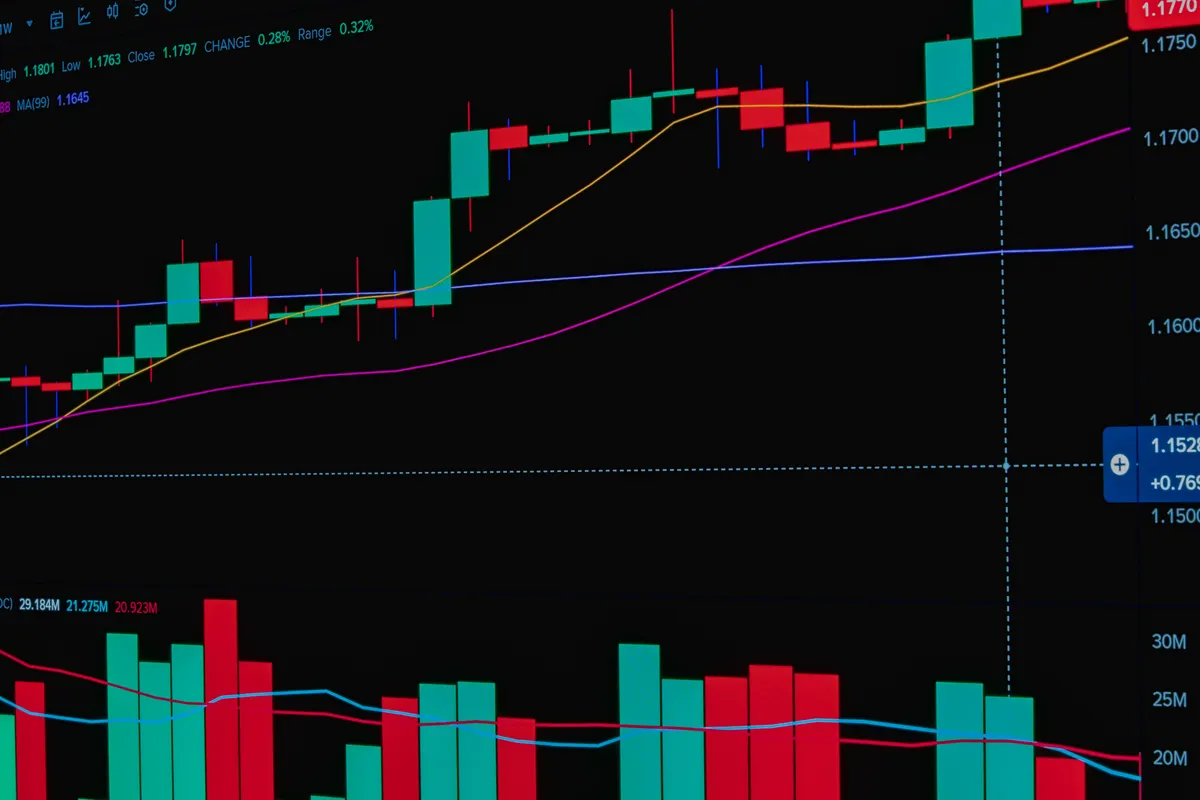
On the charts, the MACD histogram on the BTC/USDT daily has turned positive and the MACD line has crossed above the signal line, showing short-term momentum has improved from the June lows. Both lines remain below zero, so the broader structure has not confirmed a trend reversal. The RSI sits near 48, above its moving average but still below the 50 neutral line: buyers have clawed back some ground without regaining control of the tape.
Analyst Crypto Patel noted on X that BTC printed its ‘first bearish quarterly close since Q4 2023,’ and flagged the quarterly 50 EMA near $36,000 as the macro structure level to hold if Q3 deteriorates further.
The binary is straightforward: a sustained hold above $65,000 shifts the near-term narrative; a break below $60,000 opens the discussion about that final flush K33 has not ruled out. With Hormuz tensions unresolved, neither outcome looks imminent.

Sammie Heid | Cryptonexa
Sammie Heid is an Austin-based crypto journalist covering DeFi, NFTs, and on-chain analysis. Independent reporter since 2019. UT Austin '18. Luna survivor.