BPI Stablecoin Remittance Pilot Targets Freelancer Payroll Corridor

The BPI stablecoin remittance pilot represents the most direct integration yet of blockchain settlement rails into a Philippine commercial bank’s core infrastructure, with the Ayala-led lender working with digital clearinghouse Bangko Sentral ng Pilipinas-regulated channels and global partner Meridian to route inbound cross-border payments through a stablecoin layer before converting them to Philippine pesos at the point of deposit.
The pilot’s first cohort is freelancers, virtual assistants, and informal-economy workers receiving payroll from overseas, a segment that typically absorbs the highest proportional cost from legacy correspondent banking chains. BPI President and Chief Executive Officer Jose Teodoro Limcaoco framed the initiative as an extension of the bank’s digitalisation strategy, with faster access and lower transfer costs as the headline objectives. Meridian’s chief executive, Will Haering, positioned the partnership as evidence that stablecoin infrastructure can sit inside regulated banking without stripping out consumer protections.
How the BPI Stablecoin Remittance Pilot Works
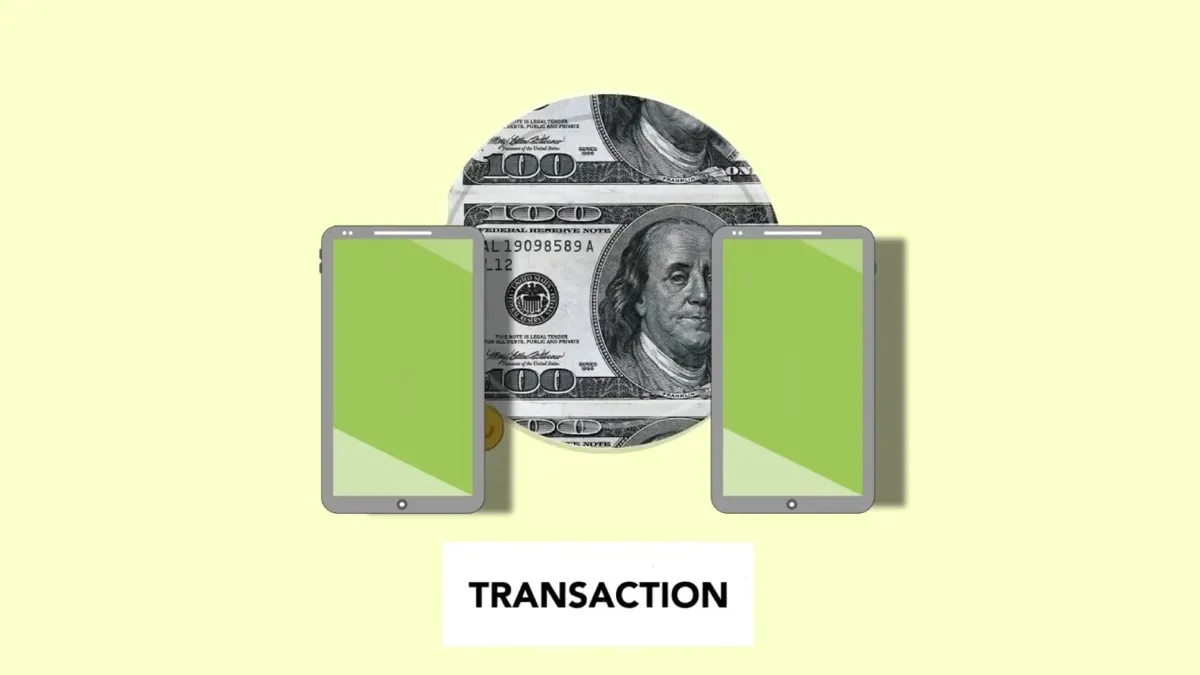
The architecture keeps stablecoins off the recipient’s balance sheet entirely. Inbound foreign currency payments settle across the stablecoin rail between the sender’s side and BPI, and the bank converts the value to pesos before crediting the customer’s account. Recipients interact with conventional banking, while the settlement efficiency sits in the layer they never see.
A March 2026 Federal Reserve research note on payment stablecoins and cross-border payments identified exactly this structural advantage: stablecoin rails can reduce frictions that would otherwise require a bank to open a foreign branch or access correspondent services from a large international institution, which carry their own cost and latency overhead. The Fed note also flagged implications for central bank balance sheets and monetary policy, the kind of systemic consideration that explains why BSP wants coordination built into the pilot from the start.
BPI has set November as the next expansion milestone, timed to coincide with the 49th ASEAN Summit, when the bank expects to present the initiative as part of a broader digital banking showcase.
BSP’s Regulatory Framework and What It Requires
The pilot operates inside a tightening regulatory perimeter. The BSP’s June 2026 guidance directed licensed virtual asset service providers (VASPs) to assess issuer background, market maturity, reserve transparency, liquidity, legal compliance, and redemption mechanics before listing any digital asset. For fiat-backed and asset-backed stablecoins specifically, providers must examine reserve composition and burning mechanisms to confirm users can redeem tokens under normal market conditions, as confirmed by the Elliptic Philippines country guide.
Privacy coins remain prohibited for licensed VASPs under BSP rules, with continuous asset monitoring mandated and internal thresholds set so that a material drop in a coin’s value or trading activity automatically triggers a review or delisting process.
Travel Rule obligations apply to all cryptoasset transfers treated as cross-border wire transfers. Under current BSP rules, VASPs must exchange originator and beneficiary information for transfers at or above P50,000 (approximately $850), with enhanced due diligence required above P500,000 (approximately $8,500), according to Notabene’s Philippines compliance guide. Any stablecoin-settled remittance flowing through BPI that clears those thresholds sits squarely inside that reporting chain.
Minimum capital requirements for VASPs under BSP Circular No. 1108 stand at 50 million Philippine pesos for custodial entities and 10 million Philippine pesos for non-custodial entities, with additional obligations covering liquidity risk, IT risk, outsourcing controls, and financial consumer protection. Meridian, operating as BPI’s settlement counterparty rather than a retail-facing VASP, will need its role defined against these classifications as the pilot scales.
Separately, the Philippine Securities and Exchange Commission has continued running its Strategic Regulatory Sandbox, known as StratBox, with four companies already admitted. BlockShoals Technologies received approval to test crypto services with Binance as its global partner, though the BSP subsequently clarified that neither entity holds a Philippine VASP licence and that sandbox participation does not substitute for BSP licensing.
The BPI stablecoin remittance pilot is not an isolated experiment. In 2024, Coins.ph expanded its peso-backed PHPC stablecoin to the Ronin blockchain for domestic gaming-economy payments. BPI’s corridor targets a different flow: regulated inbound international payroll, kept inside the banking system at every step visible to the recipient.
Whether the model scales beyond the freelancer cohort depends on the BSP’s read of the pilot data on consumer protection, reserve transparency, and settlement finality. If regulators are satisfied ahead of the November ASEAN showcase, the framework could become a template for other Philippine lenders watching from the sidelines.

Shawon Hannan
Shawon Hannan is a crypto markets writer at CryptoNexa. He covers DeFi protocols, layer-1 and layer-2 development, staking and restaking economics, tokenomics and the on-chain data behind the day's headlines. His reporting focuses on mechanism rather than narrative: how a protocol actually works, where the risk sits, and what the flows show. He tracks exchange reserves, TVL, funding and governance activity, and treats every figure as something that has to be traceable to a chain, a filing or a named analyst. He writes on protocol upgrades, exchange and ETF flows, regulation and market moves.