
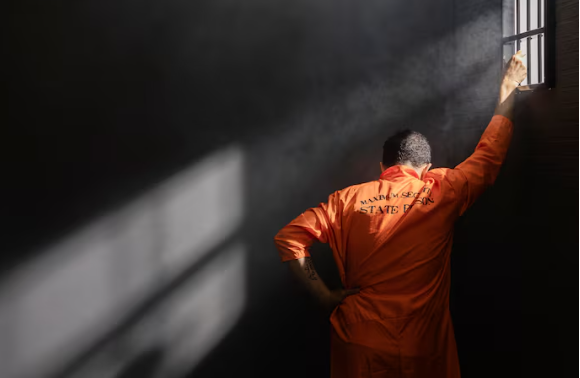
The Changpeng Zhao memoir, which debuted on Amazon on April 8, 2026, differs from the typical tech-founder reflection due to its provenance. During the four months that followed his 2023 plea agreement with the U.S. Department of Justice, CZ wrote the majority of Freedom of Money on a federal jail computer in 15-minute chunks.
A $150 million personal penalty and a $4.3 billion fine for Binance were part of the agreement. As part of the deal, CZ resigned as CEO. After his release, the book was completed, all earnings were donated to charity, and it soon rose to the top of Amazon’s Bitcoin and Cryptocurrencies list. Gary Gensler is the subject of the memoir’s most talked-about sections.
| Freedom of Money — Key Information | Details |
|---|---|
| Author | Changpeng “CZ” Zhao |
| Author’s Background | Co-founder, Binance |
| Book Title | Freedom of Money |
| Publisher | Self-published via Amazon |
| Publication Date | April 8, 2026 |
| Length | 366 pages |
| Format | Kindle and paperback |
| Royalties | 100% donated to charity |
| Where Written | US federal prison facility |
| Daily Writing Time in Prison | About 15 minutes |
| First Gensler Interaction | 2018 (advisory role offered, declined) |
| Tokyo Meeting | March 2019, Okura hotel |
| Subject’s Past Role | Former SEC Chair Gary Gensler |
| Binance DOJ Settlement | $4.3 billion fine; $150 million personal penalty |
| Reference Reporting | |
| CZ’s Trump Pardon | October 2025 |
The majority of the public narrative that developed around Gensler during his SEC chairmanship is at odds with the pattern that CZ outlines. The memoir claims that CZ met Gensler in 2018 and made him an opportunity to work as a Binance adviser. Gensler said no. In March 2019, the two met for sushi at the Okura hotel in Tokyo.
According to CZ, Gensler, who was teaching a cryptocurrency course at MIT at the time, was “very supportive of crypto” and “candidly expressed that his ambition was to be the SEC Chairman.”Later, for the MIT crypto course he was teaching at the time,
Gensler requested CZ to do a video interview. They kept up cordial email exchanges. When it became apparent that Gensler would head the SEC, CZ sent a note of congratulations. By CZ’s account, Gensler underwent a “180-degree turn” about 19 months after their interactions, which resulted in the SEC suing Binance in 2023.
The element with the greatest political weight is the Tokyo detail. The picture of a future SEC Chair discussing the industry he would later lead enforcement against while eating sushi at the Okura across from the founder of the biggest cryptocurrency exchange in the world encapsulates something that the Gensler policy debate has been finding difficult to clearly express for years.
It wasn’t only that Gensler had opposed cryptocurrency. It was that the animosity seemed to surface at the exact moment when the industry he had previously worked in become politically problematic. By outlining precise dates, locations, and encounters, CZ’s memoir provides that larger argument with a documentary backbone that previous comments lacked.
The response in Washington has been instructive. Republican senators who had previously used harsh language to describe Gensler’s tenure—publicly calling him a “incompetent cop on the beat” at one point—have now been using CZ’s memoir as more proof of what they call regulatory inconsistencies. Following the administration shift, the SEC action against Binance, which had been initiated in 2023 under Gensler’s direction and claimed several securities breaches, was dropped.
The withdrawal by itself does not prove that the case has no merit. It does imply that the prior SEC’s specific orientation was a major factor in the political desire to pursue the action. Critics who had been making fundamentally similar arguments without the precise Tokyo-and-MIT facts to ground them found resonance in CZ’s framing, which claimed that the regulatory pivot marked a “180-degree turn” rather than a progressive evolution of regulatory thinking.
The other discoveries in the memoir have generated controversy of their own. During the FTX collapse in November 2022, CZ recounts a call from Sam Bankman-Fried in which SBF allegedly asked for billions of dollars in emergency funding “with the ease of someone asking for a bologna sandwich.” The CEO of Alameda Research at the time, Caroline Ellison, is held accountable for hastening the collapse.
The founder of OKX, Star Xu, for whom CZ temporarily worked as CTO in 2014, has publicly accused CZ of falsifying information in his description of their contentious past. In other words, the memoir is not a definitive document. It’s CZ’s account of events that other participants will unavoidably describe in a different way, as told from prison and completed in freedom. In particular, the Gensler section will eventually ask Gensler or people close to him to respond in public.
Reading Freedom of Money’s larger plot gives me the impression that the book represents a particular aspect of the current state of cryptocurrency’s connection with US regulation. Trump has granted CZ a pardon. Binance is still in operation. With a net worth estimated by the public to be at least $100 billion,
CZ continues to be its biggest shareholder. His prison term was the result of an enforcement operation during the Biden administration that has mostly been unraveled. For someone who has successfully navigated the most severe regulatory action ever attempted against a cryptocurrency exchange, the memoir occasionally reads like a victory lap. In other parts, it appears to be a meticulous, intentional reworking of the public record that may influence how future historians interpret the period of crypto legislation from 2018 to 2025.
Most likely, both readings are accurate. In particular, the Gensler details are unlikely to disappear from the policy discourse anytime soon. Whether the memoir’s framing becomes part of the historical record or whether the image eventually becomes more complex than CZ’s account permits will be determined by the next chapter, which also includes Gensler’s eventual public rebuttal, if one occurs.