SOL’s five-week downtrend snapped on 10 August, with price climbing from a 7 August low of $72.49 to an intraday high of $77.36, but the governance proposals driving the narrative produced a messier result than the chart implied.
SOL Five-Week Downtrend: What the Governance Vote Actually Decided
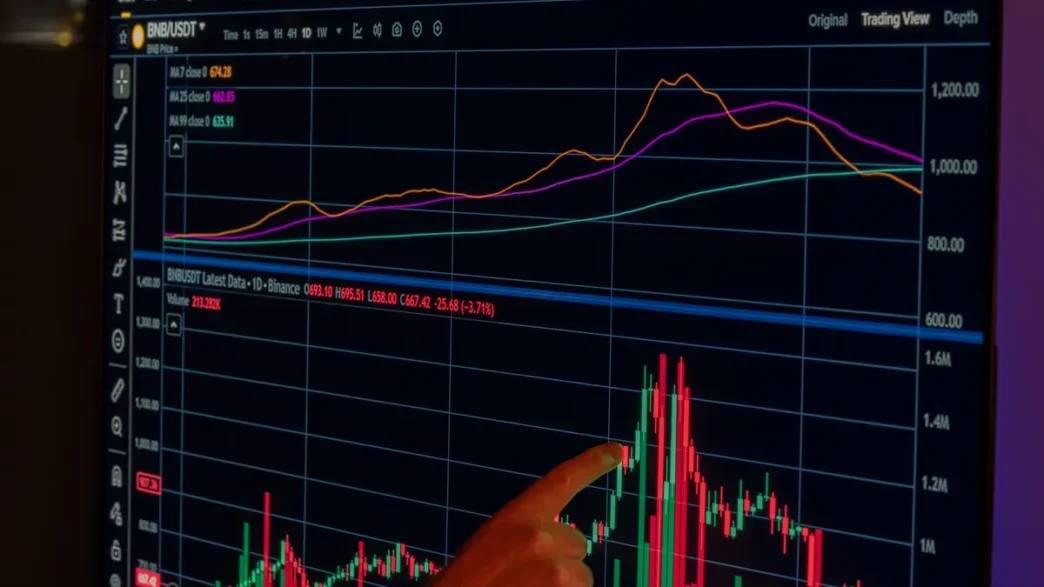
The breakout itself is clean enough on the 4-hour chart. SOL reclaimed $74.30, pushed through the upper boundary of the descending channel near $75, and printed $77.36 before encountering resistance. Volume expanded during the move and the bull-bear power indicator reached 1.23, a positive reading indicating buyers held short-term control.
The 4-hour Supertrend flipped bullish and now provides dynamic support at $75.02. Crypto analyst Dami-Defi noted the same structural shift in an 10 August post on X: ‘SOL just broke a five-week downtrend.’ The Ichimoku cloud on the daily chart remains the more demanding gate: SOL needs a sustained close above $76.93 to confirm the breakout at the daily timeframe. The Awesome Oscillator sits at -0.46, its red bars contracting but not yet reversed.
The governance catalyst, however, landed differently from the snippet’s framing. Solana Compass reports that SIMD-0550 (labelled SGP-0002) passed with 67% support, accelerating the pace of disinflation. The companion resource-fee proposal SGP-0003 (SIMD-0553) failed to clear the required two-thirds supermajority despite 61.14% participation. Per Binance Square’s republication of that Solana Compass report, the burn upgrade does not pass in this vote cycle.
That matters for the supply narrative. SIMD-0553 was the piece that would have lifted daily SOL burns from roughly 650 SOL (approximately $47,000 at prices around the vote) to between 7,500 and 9,000 SOL, or up to $650,000 per day, according to CoinDesk. What passed is the disinflation accelerator: SIMD-0550 would bring Solana to its 1.5% terminal inflation rate by 2029 rather than 2032. Temporal’s analysis, cited by Solana Compass, had found that the combined package would have reduced net annual supply growth to roughly 1.05% by 2029, below the 1.5% terminal target. The burn component that would have achieved that is now off the table for this cycle.
The governance infrastructure itself is new. Solana’s on-chain governance system (SGPs) went live on 2 July, enabling binding, stake-weighted votes for the first time. Filing a proposal requires the submitting validator to hold at least 100,000 SOL staked. A feature noted by Phase.cc is staker sovereignty: delegators can override their validator’s vote with their own stake weight. That matters because validators facing yield compression from the disinflation change and delegators who benefit from reduced inflation do not share identical incentives.
Institutional Demand and the Liquidity Levels That Matter Now
CoinMarketCap reports that DeFi Development Corp. (Nasdaq: DFDV), which describes itself as the first U.S. public company with a SOL treasury strategy, announced support for both proposals on 4 August. CEO Joseph Onorati characterised the package as meaningful steps toward a more sustainable economic model for Solana.
On the institutional infrastructure side, Western Union’s USDPT stablecoin, issued by federally chartered Anchorage Digital Bank N.A. on Solana, is integrated into Western Union’s network of over 550,000 agent locations across more than 150 countries, per Anchorage Digital. Anchorage Digital’s own newsroom separately notes that Anchorage-supported stablecoins on Solana, including USDPT, OSL’s USDGO and Ethena Labs’ USDtb, collectively exceeded $100 million on-chain. These arrangements do not require large-scale SOL purchases, but they deepen Solana’s position as regulated payment infrastructure.
The price levels that govern the short-term setup remain straightforward. The three-day liquidation heatmap concentrates leveraged positions at $77.80–$78.20. A breach of $78 would trigger short liquidations and open a run toward $80. The former channel and July swing levels place the next meaningful resistance between $82 and $84. Dami-Defi projects a possible move to $83 on a successful trendline retest. Michaël van de Poppe put a longer-term target of $100–$120 in an 10 August update, conditional on SOL forming a higher low against Bitcoin and reclaiming multiple resistance zones.
On the downside, long-liquidation clusters sit at $75.70, $75.10 and $72.80. Losing $75 opens forced selling toward $73. The Alpenglow upgrade, which aims to cut transaction finality from 12.8 seconds to 100–150 milliseconds, is expected to roll out in stages between August and October if testing holds. That remains the next structural catalyst. The disinflation vote passing is settled; the burn rate is unfinished business.