

On the evening of April 9, a single Bitcoin mining machine—a Bitmain Antminer S17+, the type of hardware that was deemed mid-range back in 2019 and has since been largely replaced by faster, newer models—was operating somewhere, in whatever room, garage, or basement this person refers to as their setup. It was processing cryptographic puzzles at a rate of 70 terahashes per second. A serious industrial operation wouldn’t bother tracking a hashrate like that. Companies like MARA Holdings, which mines at about 61,700 petahashes, have a rounding error in their spreadsheets. Nevertheless, that one machine solved block 944,306 on the Bitcoin network at some point early on Thursday morning, earning the full reward of 3.128 BTC, or roughly $222,000.
It’s hard to keep the odds in your head without losing control. The developer of CKpool, the platform the miner was using, Con Kolivas, confirmed the victory on X with a congratulatory note that contained the numbers clearly: a miner of this size has about a 1-in-100,000 chance of solving a block on any given day. In other words, if this machine were to run continuously at this hashrate, it would, on average, generate a winning block once every three hundred years. Three hundred years. On the morning of their victory, the miner’s hardware used about 0.0000069% of the total computing power of the Bitcoin network. It is a remarkable result in any mathematical sense. Additionally, it is a legitimate one according to Bitcoin’s design.
| Category | Details |
|---|---|
| The Winning Event | |
| Date | April 9, 2026 — early Thursday morning |
| Block Solved | Block #944,306 on the Bitcoin network — the 313th solo block solved via CKpool |
| Total Reward | 3.128 BTC — comprising 3.125 BTC block subsidy ($221,800) plus 0.003 BTC in transaction fees ($212); total approximately $222,012 |
| Number of Transactions | 6,755 transactions included in the winning block |
| The Miner’s Setup | |
| Hashrate | 70 terahashes per second (TH/s) — equivalent to a single Bitmain Antminer S17+, a consumer-grade ASIC released in 2019 |
| Share of Network Hashrate | Approximately 0.0000069% — the total Bitcoin network hashrate on April 9 was approximately 1.02 zettahashes per second (ZH/s) |
| Mining Method | CKpool in solo configuration — miners use the pool’s infrastructure but do not share hashrate with others; full reward goes to the individual if a block is found, minus a small operator fee |
| The Odds | |
| Daily Probability | Approximately 1 in 100,000 per day — confirmed by CKpool developer Con Kolivas, who posted the congratulations on X |
| Statistical Expectation | At 70 TH/s, a solo miner would be expected to find a block once every ~300 years of continuous operation |
| Second Recent Win | A separate CKpool solo miner earned ~$210,000 for mining block #943,411 on April 3 — that miner operated at 230 TH/s, facing approximately 1-in-28,000 daily odds |
| Broader Mining Context | |
| Industrial Comparison | MARA Holdings operates at ~61.7 EH/s; Bitdeer at ~71 EH/s — both are billions of times more powerful than the solo miner’s 70 TH/s setup |
| Solo Wins Past Year | Over the past 12 months, solo miners found only 22 blocks total, earning 69.24 BTC combined — making each individual win genuinely uncommon |
| Network Hashrate Trend | Bitcoin’s total network hashrate declined approximately 6% in Q1 2026, falling from 1,066 EH/s to 1,004 EH/s — still historically high, compressing solo odds further |
That distinction is important. Mining Bitcoin is purposefully set up like a probabilistic lottery. From the lone S17+ in someone’s spare room to the warehouse operations operating tens of thousands of rigs in locations like Texas, Kazakhstan, and Iceland, every machine supplying hashpower to the network competes to solve the same cryptographic puzzle
Your chances of winning on any given block are directly correlated with your portion of the network’s overall hashrate. It’s not manipulated. In a mechanical sense, it does not favor incumbents. Because they have the most tickets in the draw, the biggest miners typically win, but anyone with any hashrate still has a real, nonzero chance of winning. That’s what took place last Thursday. It appeared after someone purchased a very inexpensive ticket.
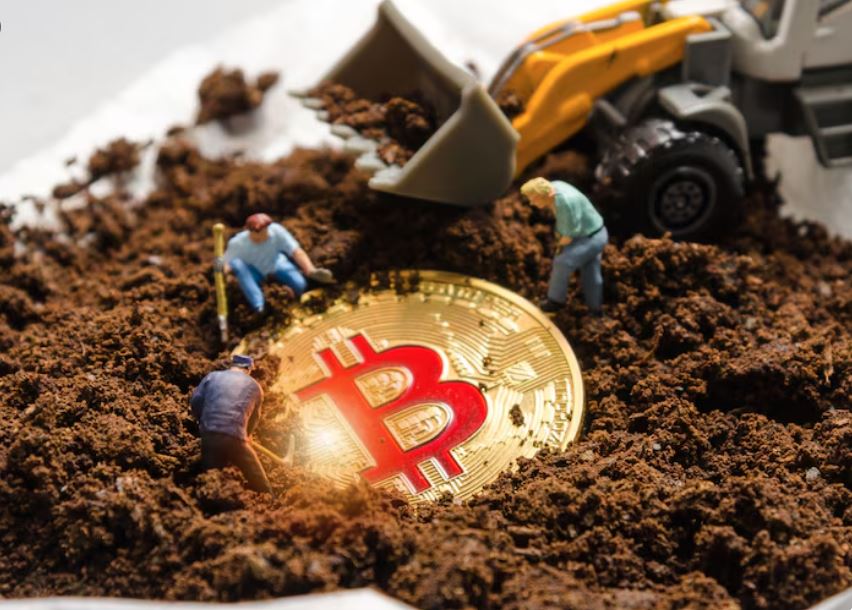
It’s important to comprehend the particular role CKpool played because it differs slightly from the general perception of mining pools. Conventional pools combine the hashpower of numerous users, locate blocks as a group, and award participants according to the amount of work they contribute. The primary use case for CKpool is distinct. Most of its users mine alone, which means they don’t share their hashrate with anyone but instead use the pool’s infrastructure to connect to the network without the overhead of running their own node. The entire reward, less a small fee to CKpool, is theirs if they locate a block. They get nothing if they don’t, which is statistically likely to happen for years, decades, or even centuries. For retail players, it’s the most straightforward manifestation of Bitcoin’s lottery logic. The majority of CKpool users will never succeed. The person who cracked block 944,306 now has $222,000 in their wallet.
This was the second such victory in less than two weeks, which makes the timing especially noteworthy. Another CKpool solo miner solved block 943,411 on April 3rd, earning about $210,000 at a rate of 230 TH/s, which is about three times the hashrate of the block 944,306 winner. That miner defeated expectations that would have required them to wait more than a century for a single block at that size, despite having somewhat better odds—roughly 1 in 28,000 per day. Two victories in ten days, both on the same platform, both from lone miners using equipment that would be insignificant in any industrial setting. The cryptocurrency community took notice. The responses varied from sincere joy to the specific kind of bitterness that develops when money is distributed by chance in ways that seem unlikely but aren’t unjust.
Even from a distance, it’s difficult to watch these stories develop without feeling something. Over the previous five years, there has been a significant consolidation in the industrial mining sector of Bitcoin. The companies that control the hashrate today operate custom-designed ASIC chips that were nonexistent when the block 944,306 miner’s S17+ was produced, run purpose-built data centers, and negotiate bulk electricity contracts with utilities.
The solo victory now seems more and more archaic, a holdover from the early days when Satoshi was mining blocks on a laptop due to the professionalization of Bitcoin mining. However, the protocol has remained the same. Since January 2009, every block has been governed by the same rules that let a hobbyist take home $222,000 last Thursday. Depending on how seriously you take it, that could be a profound design principle or a charming quirk. Which interpretation you select is probably irrelevant to the miner who solved block 944,306.