
When a Bitcoin mining operation is operating at maximum capacity, you can hear a specific sound inside: a low, constant mechanical hum that reverberates through the concrete floor and lingers in your ears for hours after you leave. Early in 2026, a significant portion of the sector is experiencing a noticeable decrease in that sound.
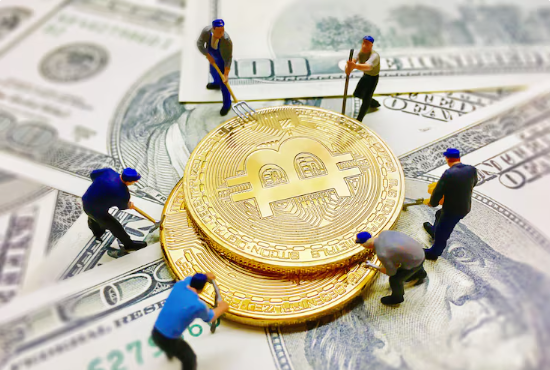
The math isn’t working, therefore operators in West Texas, Kentucky, Quebec, and portions of Central Asia have been turning off rigs. Nowadays, it is frequently more expensive to produce a single Bitcoin than the coin’s market value. The penny analogy that has begun to appear in industry reports is no longer truly metaphorical. In a larger denomination, the issue is exactly the same.
| Bitcoin Mining Crisis 2026 — Key Information | Details |
|---|---|
| Reporting Period | March–April 2026 |
| Industry Status | Widespread negative margin scenario |
| Network Difficulty Drop | 7.76% |
| Primary Cost Driver | Electricity (largest single operating expense) |
| Crude Oil Price Move | Up over 50% |
| Production vs. Value Gap | Production cost above BTC market price |
| Common Operator Response | Hardware shutdowns, fleet decommissioning |
| Strategic Pivot | Transition from BTC mining to AI compute |
| Comparable Historical Episode | The U.S. penny (cost-to-mint exceeds face value) |
| Major Publicly Listed Miners | Marathon Digital, Riot Platforms, CleanSpark |
| Power Cost Hot Spots | Texas, Kazakhstan, Iran |
| Network Reference | bitcoin.org |
| Analyst Reference | CoinShares, JPMorgan mining notes |
| Comparable Crisis | Post-2022 mining washout |
| Long-Term Effect | Industry consolidation around lowest-cost operators |
Miners have been warning about the squeeze’s mechanics for years, but they didn’t exactly anticipate it landing this heavily. In recent months, the price of crude oil has increased by more than 50%, which has raised the cost of power. Any mining operation’s biggest operating cost is power, and even a small increase adds up quickly over a fleet of thousands of ASIC processors.
Simultaneously, the price of Bitcoin has dropped to the point that a large portion of the industry’s production-to-revenue ratio is now negative. Network difficulty, which is a measure of the amount of processing power competing to mine each block, decreased by 7.76%. This may seem insignificant, but it is indicative of major hardware going offline.
Although the penny example isn’t perfect, it does illustrate how these things can occasionally be. For years, the cost of minting the US penny has exceeded its face value. Treasury authorities have made several proposals to do away with it. Both cultural inertia and the fact that altering the system would be more expensive than continuing to lose a few pennies on each coin are contributing factors to its persistence.
Bitcoin lacks such privilege. The loss is not being absorbed by a sovereign treasury. Every miner is a private company doing a private calculation; if the computation is negative for an extended period of time, the rigs are shut down, employees are let go, and the facility is either sold or put to another use.
The aspect of the story that has taken some investors by surprise is the repurposing. Marathon Digital, Riot Platforms, CleanSpark, and a number of smaller operators are among the major publicly traded miners that have been actively moving their infrastructure away from Bitcoin mining and into AI computation.
With just minor adjustments, the data centers they constructed for proof-of-work mining prove to be beneficial for housing GPU clusters that can be leased to AI firms in need of capacity. The economics are more effective. Customers are paying more. There is less volatility in the margins. Speaking with operators who have made the change, it seems like they don’t necessarily anticipate returning to mining even if the price of Bitcoin rises. The cost of opportunity has shifted.
When industry historians write about this period later, it most likely results in the subsequent cycle of consolidation. Capacity from operators driven out by the squeeze will be absorbed by the miners with the least expensive power, the best gear, and the strongest balance sheets.
The smaller, less productive players will go unnoticed. That’s essentially what transpired following the washout in 2022, and the pattern is recurring with more pronounced edges. No one can say with certainty if the surviving fleet will finally be saved by the next pricing cycle, the next halving, or the larger macroenvironment.
For what it’s worth, the penny is still being produced. The corresponding challenge for Bitcoin is whether a private industry can tolerate such patient, unprofitable perseverance. Evidence from early 2026 indicates that it doesn’t.