
Refineries have a distinct smell that lingers in the air long after you leave. It is dense, metallic, and somewhat burnt. Most investors don’t consider it when they see the price of crude oil rising on a screen. However, those figures translate into actual movement someplace, distant from trading floors: pipes humming, tankers loading, and pressure-filled decision-making. Those choices feel more pressing than normal right now.
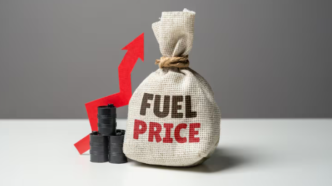
In recent sessions, the price of crude oil has increased near $98 per barrel, remaining stable above $97. That would be noteworthy on its own. However, it is more difficult to ignore given the background. Since the crisis between Iran and its neighbors escalated, prices have increased by about 50%. It’s not a quiet move.
Crude Oil Prices: A Market Moving on Tension and Uncertainty
| Element | Information |
|---|---|
| Commodity | Crude Oil (WTI) |
| Current Price | ~$98.24 per barrel |
| Recent Trend | Up ~50% since conflict escalation |
| Key Drivers | Middle East conflict, supply disruptions |
| Major Risk Point | Strait of Hormuz disruptions |
| Policy Factor | US Jones Act temporarily waived |
| Reference Website |
It is somewhat motivated by a physical factor. Missile strikes, facility damage, and logistical disruptions are examples of attacks on energy infrastructure that are real concerns. They have an immediate impact on supply. Iran’s attack on a Qatari location connected to the biggest LNG export companies in the world was more than just a geopolitical move. There were immediate repercussions for the interruption.
It seems like traders are pricing in more than just possible risk. They are reacting to things that are already happening. The Strait of Hormuz, which is frequently discussed but seldom closed, has once again gained attention. It is among the world’s most important oil transit routes. Global supply chains are affected by any disturbance there, no matter how small.
The recent increase might be more than just fleeting anxiety. It can be a symptom of a structural change in the perception of supply. Conversations have become more acerbic when strolling around business districts. More urgency, less conjecture. After all, the world economy revolves around oil. Rapid price increases have an impact on consumer products, manufacturing, and transportation.
Complicating matters is a political component as well. The U.S. government’s temporary waiver of the Jones Act, which permits foreign vessels to deliver energy domestically, indicates an awareness that managing supply limits is getting more difficult. Despite its technicality, that maneuver suggests something more profound. Authorities are attempting to reduce pressure before it intensifies.
Investors appear to think that these actions would be beneficial in the short run, but they don’t deal with the fundamental problem of supply uncertainty. The current pricing levels might not hold if tensions persist or worsen.
However, markets are rarely one-way. A counterpoint is always present. Some researchers contend that if prices increase too quickly, demand may decline, particularly if rising energy costs start to impede economic growth. Which force will prevail is still up in the air.
This conflict between limited supply and unpredictable demand leads to a form of instability. Prices change in response to news, data, and occasionally rumors; they don’t merely go up or down.
This dynamic is captured in a single moment. A trader looks at two displays, one with breaking news alerts and the other with oil futures. Prices change in a matter of seconds after a headline publishes.
Perhaps more than most commodities, crude oil reacts to both fact and perception. Just as much as actual shortages, expectations about future supply can affect prices. Expectations are also changing at the moment.
It’s difficult to ignore how rapidly sentiment has shifted. Just a few months ago, the main topics of conversation were steady supply, reasonable costs, and steady demand. The terminology is now different: risk, escalation, and disruption.
In the past, increases in oil prices have come before more significant changes in the economy. They occasionally cause inflationary pressure, which compels central banks to take action. At other times, they indicate more profound geopolitical divisions that require more time to heal. I feel like I’m in between right now.
There’s a sense that things might get better. Conflicts become less intense. Routes of supply are reopened. Prices decline. This is nothing new for markets. However, there’s also a persistent doubt.
What if things are different this time? What happens if interruptions last longer than anticipated? What happens if supply limitations become less transient and more structural?
There are no quick answers to those questions. As this develops, it seems like crude oil prices are doing more than just reflecting the state of affairs. They are speculating about what might happen next. Risk that hasn’t fully materialized but seems more and more likely is priced in. And there can be a lot of strength in that anticipation.
For the time being, prices are still high and close to levels that start to have an impact on daily living as well as markets. Fuel prices are rising. The cost of transportation rises. Companies adapt. There is already a rippling effect.
In situations like this, crude oil—which is sometimes viewed as just another line on a financial chart—becomes more palpable. A reminder that remote events can have instant repercussions and that global systems are interrelated.
And as long as there is political, economic, and logistical uncertainty, those prices will keep fluctuating, reflecting not only current events but also potential future developments.