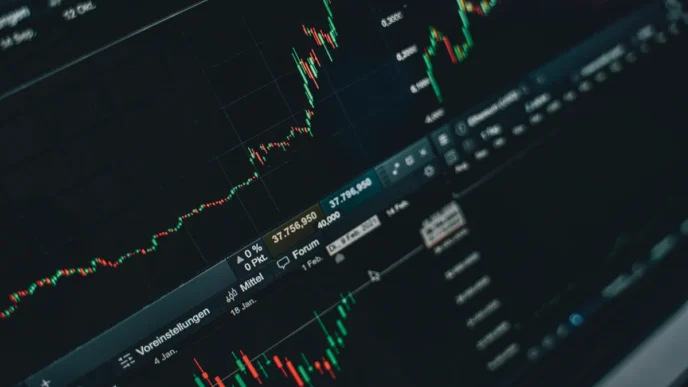

A chart of open interest rising more quickly than the price of the underlying asset gives derivatives traders a certain impression. The spot market hasn’t yet determined which way it wants to break, but the numbers on the screen indicate that more money is moving into leveraged bets. The funding rate is fluctuating between positive and negative. The buy-sell ratio of takers is changing. The entire market begins to resemble a room full of people leaning against one wall, watching to see which way it gives.
Ethereum is now trading at about $2,287 as of Wednesday, May 14, 2026, with some estimates showing a 24-hour increase toward $2,372. The total amount of open interest in ETH across international exchanges is between $34.97 and $35.61 billion. This type of number has usually resulted in either a quick, unsightly liquidation cascade or a vertical breakout. Very rarely is there anything in between.
| Category | Details |
|---|---|
| Asset | Ethereum (ETH) |
| Data Tracker | CoinGlass (aggregated derivatives data) |
| Current ETH Price (May 13–14, 2026) | ~$2,287 – $2,372 |
| 24-Hour Move | +8.77% on certain readings; range-bound elsewhere |
| Total Open Interest (May 14, 2026) | $34.97 – $35.61 billion |
| Open Interest in ETH (Units) | ~13.5 million ETH (down from 14.4M on April 18) |
| 24-Hour Futures Volume | $44.7 – $70.2 billion |
| 24-Hour Spot Volume | $2.36 – $4.37 billion |
| 24-Hour Liquidations | ~$95.86 million |
| Binance Share of ETH Futures OI | ~29% |
| Funding Rate (early 2026 peak) | +0.56% (extreme positive — sign of long crowding) |
| Funding Rate (late April / May) | Negative (shorts compensating longs) |
| ETH Taker Buy-Sell Ratio | Slipped below neutral on aggregate; above 1.0 on Binance specifically |
| Aug 2025 OI Peak | ~$60 billion (alongside ATH of $4,946) |
| Mar 2026 OI Spike | +9% (resulted in partial corrections) |
| Apr 2026 OI Surge | +26% (rally toward $2,400 resistance) |
| Key Resistance | $2,400 |
| Key Support | $2,150 – $2,200; deeper at $1,900 |
| 20-Day EMA | $2,287 |
| 100-Day EMA | $2,365 |
| ETH Market Cap | ~$286.63 billion |
| Notable Analyst | Ted Pillows; Daan Crypto Trades (May seasonality) |
When you actually extract the data from CoinGlass and the other main derivatives monitors, it presents a multi-layered narrative. The total amount of open interest in ETH has decreased from 14.4 million on April 18 to 13.5 million ETH in unit terms. However, because the price has been steady, the dollar’s value has stayed high. Over the last day, liquidations have been at about $95.86 million, which is significant but not very high. The daily volume of futures trade has fluctuated between $44.7 billion and $70.2 billion, which is multiple times the volume of spot trading.
Short sellers are now paying longs to hold positions because the funding rate, which earlier in 2026 reached an extremely positive value of +0.56% during the rally that propelled ETH toward its all-time high of $4,946 in August 2025, has since drifted into negative territory. Even if Binance’s own taker buy-sell ratio is above 1.0 for the first time in three years, it indicates a negative short-term outlook.
The current situation is particularly significant because of the history of this type of setup. As the price surged to its all-time high in August 2025, open interest in ETH hit almost $60 billion. One of the biggest liquidation cascades in ETH’s history resulted from the deleveraging that ensued after the price halted and then rolled over. Billions of dollars’ worth of leveraged longs were flushed out when the asset reached its lowest point in February 2026, which was close to $1,743. A partial correction in March 2026 was preceded by a 9% increase in open interest.
As ETH got closer to $2,400 in April 2026, traders kept a careful eye on a surge that was accompanied by a 26% increase in open interest. The same pattern every time. The market either breaks through with conviction or the leverage is eliminated when open interest increases and the price tests a significant level. Not every time does the pattern recur. But the arrangement is recognizable.
What occurs at $2,400 is the central question in the current discussion. Technically speaking, that price level is where the 50-day and 200-day moving averages, which are both between $2,361 and $2,367, have converged within a $5.80 band. Both averages would move from resistance to support with a clean daily close above that cluster, creating a path toward $2,750 and, in many analyst models, toward $2,800 to $3,000 by late Q2.
The next leg of support would be at $1,900 to $2,000 if $2,300 was not held and the $2,150 to $2,200 range broke. Ted Pillows, a cryptocurrency analyst, has been clear about this, identifying the $2,150 to $2,200 level as the crucial floor whose collapse might hasten the decline. To put it simply, the market is on the verge of collapse. At the current levels of open interest, whatever comes next happens quickly.
The historical seasonality is what makes the May setup so erratic. At the end of April, Daan Crypto Trades, a well-known commentator on derivatives, noted that May has continuously been one of Ethereum’s most erratic months. In comparison to other calendar months, May’s average and median returns are both at extremes. There is no steady progression in the pattern. It moves in both directions with acute directionality.
The volatility scenario is exceptionally rich when combined with the present macro parameters, which include the U.S. CPI reading at 3.8% in the most recent print, the Fed keeping rates at 3.50% to 3.75%, and continuous geopolitical pressure from the Middle East crisis. The current open-interest tension could be resolved by any of those macro factors moving in an unanticipated direction.
The dynamic is further complicated by the exchange concentration. A surprise move big enough to liquidate even a tiny percentage of the leveraged positions on one exchange might have an impact on the entire derivatives ecosystem because Binance alone accounts for about 29% of ETH futures open interest. When they occur in cryptocurrency, cascading margin calls do not result in orderly de-risking. Depending on whether side is overextended, they may cause vertical drops or vertical squeezes.
A reasonably recent reminder of how this operates came in December 2025. More than $1 billion in leveraged positions were closed in a matter of hours after Bitcoin momentarily surpassed $86,000. With the added complication that institutional spot ETF flows have been mixed rather than overwhelmingly supportive, ETH at current levels poses a similar setup risk.
The “moonshot” route, which is preferred by the majority of ETH holders, involves both the increase in open interest and ongoing whale accumulation. Several on-chain trackers show that during the first two weeks of May, whales purchased 230,000 ETH while ordinary investors sold almost 1.5 million ETH. Over a 90-day period, the Spot Taker CVD, which compares aggressive spot buyers to aggressive spot sellers, has turned positive. If the combination holds, it would imply that new long positions are being created based on actual spot demand rather than speculative leverage.
In the past, long-lasting rallies have been preceded by this type of structural arrangement. Even while the overall market funding rates indicate otherwise, the greatest single indication that institutional posture is leaning positive is the Binance-specific Taker Buy-Sell Ratio staying over 1.0 in a steady, non-volatile manner. In essence, the bull case is predicated on the idea that while the market and institutional flows subtly indicate the opposite direction, the negative funding rates represent retail pessimism.
Mechanically speaking, the “massacre” route is simpler to explain. The leveraged longs that accumulated during the April spike in open interest become susceptible if ETH is unable to maintain the $2,300 to $2,400 range. Requirements for margins are tested. Liquidations that are forced cascade. The next discernible support cluster is located much below the present pricing. In that case, a number of analysts have identified $1,900 to $2,000 as the realistic retest zone, with $1,650 serving as a tail-risk floor in the event that circumstances worsen.
With $35 billion in open interest, a deleveraging event would make headlines and probably cause the entire cryptocurrency market to decline. None of this is anticipated. The existing data just describes the asymmetric arrangement. A crash is not caused by high open interest. Nonetheless, it sharpens the final move in whatever direction the market decides.