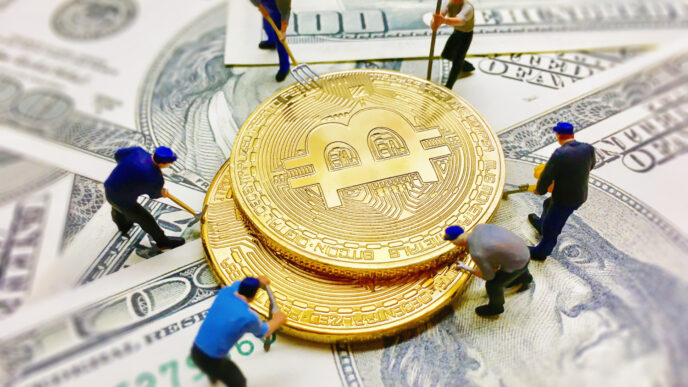

The most recurring headline and most misinterpreted aspect of cryptocurrency is its volatility. Prices continue to fluctuate dramatically, sometimes within hours, making the market feel more like a swift-moving tide that continually tests patience and balance than a serene river. However, significant changes are taking place beneath that surface.
Volatility is a result of timing and design, not chance. As a reaction to the shortcomings of centralized finance, cryptocurrency arose, emphasizing fixed supply and independence over seamless pricing. Although that decision created chaos in early price discovery, it also set the stage for a system that is impervious to political meddling and manipulation.
| Key Focus Areas | Details |
|---|---|
| Subject | Cryptocurrency market volatility |
| Central Question | Whether crypto can become structurally more stable over time |
| Key Volatility Drivers | Speculation, sentiment, leverage, liquidity gaps, regulation |
| Stabilizing Forces | Institutional capital, clearer rules, market depth, stablecoins |
| Broader Impact | Adoption, trust, financial inclusion, systemic risk |
| Reference Source | https://www.fidelitydigitalassets.com |
Speculation still has a significant impact. Because most crypto assets lack the conventional anchors of valuation present in bonds or stocks, price formation is left up to speculation and expectations. These stories quickly gained traction on social media, eliciting responses that are remarkably consistent across geographies and investor types.
This behavior is reinforced by the way cryptocurrency trading is structured. There is no closing bell to slow the momentum of the markets, which run continuously. News spreads instantly, and traders in different time zones react sequentially, each movement compounding the next, much like a swarm of bees reacting to a sudden disturbance.
Although it is getting better, liquidity is still uneven. Large trades are more easily absorbed by major assets, but when big orders come in, smaller tokens still move sharply. A single move made by a major holder in these thinner markets can have far-reaching effects, igniting excitement or fear.
In particular, leverage has proven to be unstable. Gains are amplified by high leverage, but losses are also accelerated, resulting in automatic liquidations that spread throughout the system. Crypto’s reputation for instability is further cemented by this mechanism, which is remarkably effective at converting slight corrections into sharp drops.
Another level of complexity is introduced by regulation. Uncertainty brought about by ambiguous or changing regulations causes markets to price in right away. Rallies are frequently sparked by announcements that allude to approval, while enforcement actions lead to sell-offs. Volatility is still a reasonable reaction to policy ambiguity until frameworks are consistent.
The data presents a more complex picture in spite of these forces. Compared to the early days of cryptocurrency, volatility has significantly decreased. As market capitalization increases, the relative impact of individual trades decreases, resulting in smoother price movements and fewer extreme swings.
Participation from institutions has been especially helpful. Banks, endowments, and asset managers bring disciplined strategies and longer horizons to the market. Access has been further expanded by spot Bitcoin ETFs, which offer consistent demand that supports prices rather than following trends.
This development is similar to other assets’ early histories. For instance, before institutional adoption and standardized markets brought about more stable behavior, gold went through periods of extreme volatility. The trajectory of cryptocurrency seems remarkably similar, albeit condensed into a much shorter period of time.
A useful reaction to the ecosystem’s volatility is the rise of stablecoins. They enable users to lend and transact without continuous repricing by keeping a peg to fiat currencies. When reserves are transparent and properly regulated, this function has proven to be surprisingly low risk.
Stablecoins, however, present new difficulties. Critics caution that inadequate reserve management could exacerbate systemic stress. By requiring disclosures and safeguards, recent regulatory initiatives seek to address this and turn stability from a promise into a verifiable attribute.
Additionally, market infrastructure has developed. Today, professional market makers smooth price action and minimize slippage by providing liquidity across major venues. Hedging is made possible by derivatives markets, which let traders control exposure rather than selling during volatility.
In the end, broader adoption might most significantly alter volatility. Demand is linked to utility rather than speculation as cryptocurrency is used for decentralized finance, remittances, and settlement. Because selling pressure is not only opportunistic, assets held for use typically trade more steadily.
Cultural cues are also important. Once, sudden spikes and crashes were caused by celebrity endorsements, demonstrating the excessive influence of sentiment. The narrative is becoming noticeably better as institutional commentary on infrastructure and long-term value gradually replaces those voices.
Volatility continues to be a barrier to daily use for society. It is impractical to price groceries or salaries in cryptocurrency when values change every day. However, in comparison, the fluctuations of cryptocurrencies can seem incredibly stable, providing an alternative store of value in areas where national currencies are unstable.
Education has a subtle but significant impact. Panic reactions decrease as participants gain a better understanding of cycles, leverage, and liquidity. Knowledgeable investors are less prone to act on impulse, which lessens feedback loops that inflate price fluctuations.
It is unlikely that cryptocurrency will become as stable as established currencies or government bonds. Continuous price discovery is ensured by its open participation and fixed supply. To a certain extent, volatility indicates that markets are still assessing its usefulness and role.
Whether volatility can drop to levels consistent with trust and wider adoption is the more pertinent question. Even though fluctuations are still a part of the experience, evidence indicates that extreme swings are becoming less frequent.
The volatility issue with cryptocurrencies may never completely go away, but it is changing. Instability becomes less of a permanent defect and more like a stage of maturation as institutions invest, regulations become clearer, and real use cases grow. The future seems hopeful, forward-looking, and noticeably more stable than it was in the past.