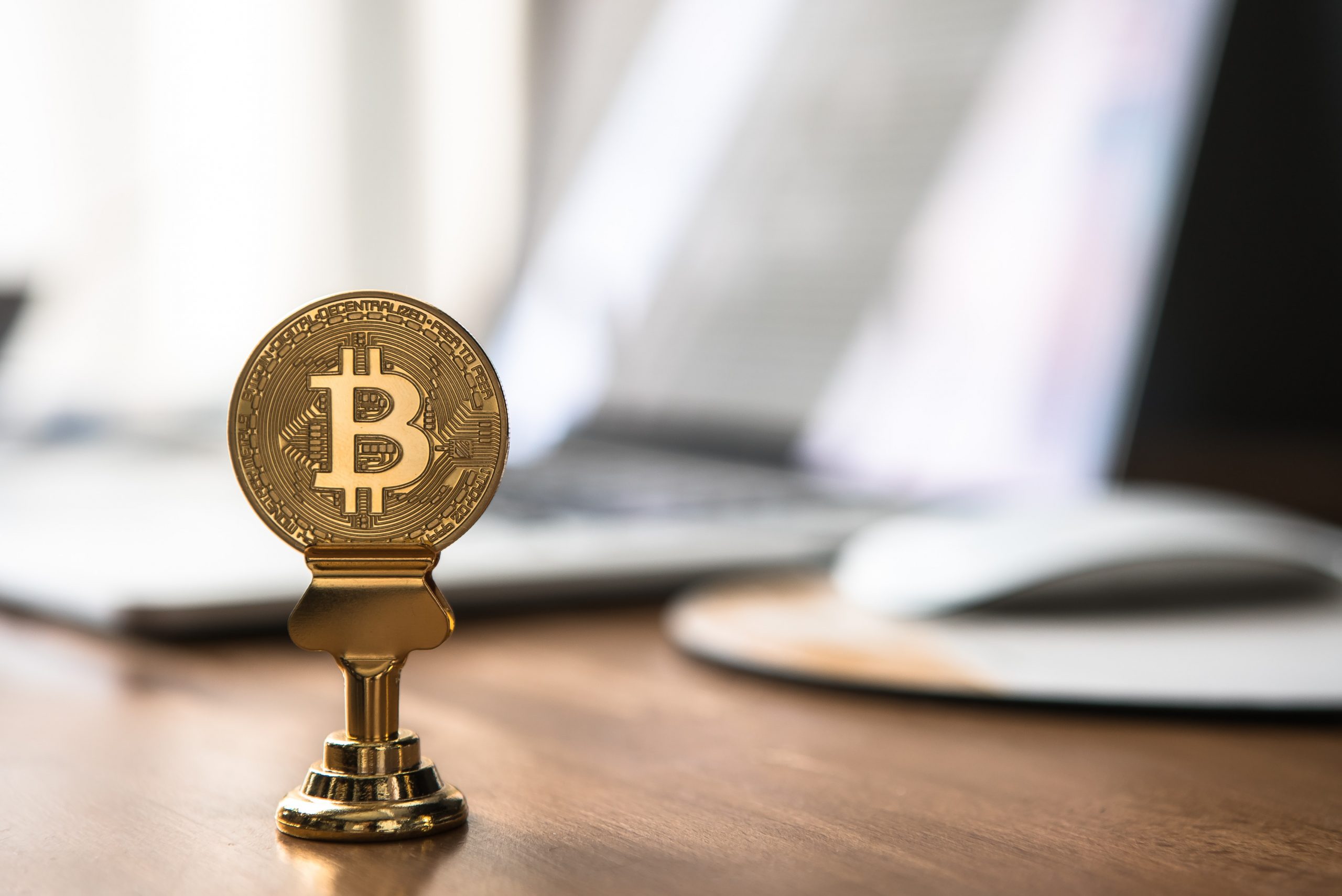
One of the more dependable tenets of contemporary American finance is Warren Buffett’s rejection of Bitcoin. There is a certain kind of conviction that only becomes stronger with age. Buffett, who is currently in his mid-nineties, continues to denigrate cryptocurrencies as something between gambling and superstition at the Berkshire Hathaway annual meeting in Omaha, which has become a yearly stage with its folksy speeches and packed convention rooms. Following the 2025 transfer, Greg Abel officially assumed the role of chief executive, and he has remained consistent. The situation hasn’t altered. But the math surrounding it hasn’t.
$397.4 billion is the most significant figure on Berkshire’s balance sheet as of May 2026. This is the company’s cash and short-term equivalents position, a record number that reflects Buffett’s long-standing commitment to avoiding overpaying for acquisitions as well as the fact that there aren’t many conventional targets big enough to significantly absorb that kind of capital. Naturally, the money earns interest. The yield situation for Treasury bills is still favorable. However, over extended periods of time, cash—even well-managed cash—is an inherently low-returning asset. Given Berkshire’s size, the opportunity cost of storing close to $400 billion in low-yielding securities can be estimated over time in tens of billions of dollars.
| Information | Details |
|---|---|
| Company | Berkshire Hathaway |
| Chairman Emeritus | Warren Buffett |
| Current CEO | Greg Abel |
| Cash and Equivalents | Record $397.4 billion |
| Position on Bitcoin | Rejection maintained |
| Famous Quote | “Rat poison squared” |
| Recent Reaffirmation | Early 2026 |
| Underlying Investment Philosophy | Value investing, cash-flow producing assets |
| Bitcoin Performance (since 2025) | Outperformed S&P 500 and Berkshire Hathaway stock |
| Estimated Allocation Forgone | 5% of cash, per 2025 analyst models |
| Hypothetical Allocation Value | Hundreds of millions in unrealized gains |
| Reference Market Index | S&P 500 |
| Cryptocurrency Data Source | CoinMarketCap |
| Leadership Transition | Buffett to Abel (post-2025) |
| Capital Deployment Challenge | Limited traditional acquisition targets |
| Critics’ View | Missed inflation hedge opportunity |
| Defenders’ View | Discipline over speculation |
In contrast, Bitcoin has persisted in doing just what its proponents said it would. The cryptocurrency has significantly outpaced the S&P 500 and Berkshire Hathaway’s own stock since 2025. Anyone who continues to argue that the asset class has no investable merit is now uncomfortable with the annualized returns. For more than a year, analysts at large investment institutions have been running the obvious hypothetical. What would have happened if Berkshire had invested even five percent of its cash in Bitcoin at the beginning of 2025? The answer varies from several hundred million dollars to a few billion dollars in unrealized gains, depending on assumptions. Even for Berkshire, those are not insignificant figures.
The intellectual purity of Buffett’s stance is what makes this issue more intriguing than the typical Bitcoin argument. Although all of above would be valid objections, he has not declined to invest in Bitcoin due to execution difficulties, custody issues, or regulatory ambiguity. Because the asset does not generate cash flow in his paradigm, he has declined. Crops are produced on a farm. A factory makes products. A railroad transports cargo. The price of a bottle of Coca-Cola is more than the cost of production.
According to Buffett, Bitcoin generates nothing. The next buyer’s willingness to spend more than the prior one determines its value. That goes against the value investing ideology that has shaped his entire career and is, in his words, the greater fool idea wrapped in contemporary technology.
For Berkshire shareholders, this argument is problematic because Buffett’s framework was created at a time when monetary policy was considerably different from what it is today. Massive central bank balance sheet expansions, persistent inflation, and a structural decline in the real return provided by conventional fixed income have all resulted from the post-2020 era. In that context, an asset with provable scarcity—even if it generates no cash flow—has taken on a financial role that did not exist when Buffett was developing his ideas in the 1950s and 1960s.
The question of whether Bitcoin should be regarded as digital gold or just a highly volatile speculation will carry on for years. The practical point is that an increasing number of major institutional allocators, such as company treasuries, pension plans, and sovereign wealth funds, have already resolved the issue and increased exposure.
Additionally, there is the cultural aspect of the narrative, which is more difficult to measure but more palpable. Like its chairman, Berkshire’s shareholder base is getting older. Although tens of thousands of people still attend the annual meeting, the average participant is far older than the average reader of a contemporary financial journal. Younger investors have mostly stopped seeking advice from Omaha, especially those who have amassed fortune over the past ten years through technology companies, real estate, and cryptocurrencies.
The audience that follows Buffett’s every move about asset allocation has shrunk, but his aura still endures. As this develops, it’s difficult not to wonder if Greg Abel will subtly modify the stance throughout his tenure, even if he never states it out loud. Rarely do new CEOs disagree with their predecessors. They just work around them.

In cryptocurrency circles, Buffett’s “rat poison squared” quote—which he has used and reiterated for years—has become a sort of inside joke, lovingly repeated by those who have profited from betting against his premise. The joke seems to be becoming more and more one-sided. Buffett’s stance is unchanged. His surroundings have. The asset that he discarded at $1,000, $10,000, $50,000, and now at significantly higher levels has obstinately refused to go away.
The more unsettling concern for Berkshire shareholders is if the company’s investing process is now structurally prejudiced against assets that don’t fit a model created fifty years ago. Cash flow productivity is a benchmark that can be justified. But it’s not the only legitimate one. For similar reasons, gold is on Berkshire’s permanent rejection list. On its own, gold has consistently generated returns that have above inflation. A discipline can occasionally turn into a limitation. The restriction can occasionally become costly.
It’s possible that Buffett’s position may be fully validated during the following ten years. Technical difficulties, regulatory pressure, or just a decline in market confidence might cause Bitcoin to crash. The volatility of the cryptocurrency is still present, and it has had repeated drawdowns of at least 70%. A write-down of all present gains in the future is well within the range of realistic possibilities. Some longtime Berkshire observers believe that the chairman is essentially placing a wager on the inevitable return. Only time will tell if that wager is profitable.
The money is currently sitting in Omaha, making what it makes. Bitcoin is still on its bizarre, divisive march. At investor events, Greg Abel still declines to answer questions about it. And those who are paying attention, Berkshire shareholders, are still quietly calculating the potential impact on the company’s performance over the previous two years of a different allocation decision. The response is awkward. What the cryptocurrency does next will determine whether it stays unpleasant.